Get Full Government Meeting Transcripts, Videos, & Alerts Forever!
Get email alerts on the Legislation topic
No spam. Unsubscribe anytime.
Governor will sign crypto bill but will not sign syringe-exchange bill, citing concerns and listing restrictions
Summary
The governor said he will sign a crypto bill after negotiators made it acceptable to him. He also said he will not sign (nor veto) a syringe-exchange bill, outlining limits: residency ID, exchange-for-used-syringe, 1,000-foot buffers from schools/child-care/religious institutions, five-year extension, and IDOH enforcement authority.
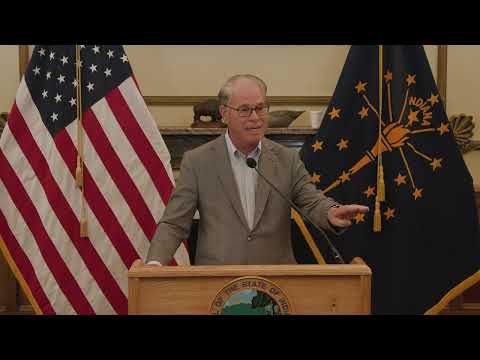
The governor told reporters he will sign a bill regulating cryptocurrency-related activity after changes were made that made the measure "signable," and that he will leave a syringe-exchange bill unsigned while describing the conditions it adds.
On the crypto bill, the governor said the legislature and his team were able to put provisions into the measure that allowed him to sign it. "I'm going to sign it because we were able to put some stuff in it that made it signable," he said.
On syringe exchange, the governor said he would not sign the bill but would refrain from a veto. He listed specific restrictions included in the legislation: recipients must show a valid ID card proving residency in the exchange region; recipients must provide a used syringe to receive a clean one; exchanges may not distribute within 1,000 feet of a school, child-care facility or religious institution; the program extension is five years rather than ten; and the Indiana Department of Health (IDOH) may shut down an exchange program that does not comply with the law. "When we got that into it, and the reason I didn't sign it is because I think that's treating a symptom, and we need to get at the underlying issue," he said.
Why it matters: the decisions affect two separate policy areas—financial regulation and public-health harm-reduction programs. The crypto bill's signing will make its enacted provisions law; the syringe-exchange changes alter how and where exchanges operate and add IDOH enforcement authority, but the governor's choice not to sign leaves uncertainty about the political framing and implementation timeline.
What happens next: the crypto bill will be signed by the governor and take effect according to its statutory timetable. The syringe-exchange law contains detailed operational restrictions and explicit enforcement authority for IDOH; the governor said legislative and administrative follow-up remains necessary to address underlying issues he raised.