Get Full Government Meeting Transcripts, Videos, & Alerts Forever!
Get email alerts on the Energy topic
No spam. Unsubscribe anytime.
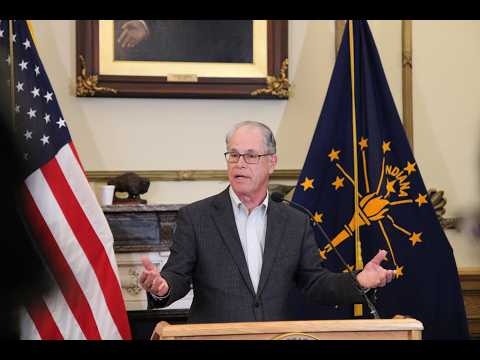
Governor says utility reforms will prioritize ratepayers as state moves to performance-based ratemaking
Summary
The governor said Indiana replaced three of five IURC commissioners to make the commission more ratepayer-conscious, highlighted a 10% recommendation from the Office of Utility Consumer Counselor and said new performance-based incentives will tie utility returns to affordability and reliability.
The governor used the briefing to emphasize a shift in utility regulation away from assured returns toward performance-based ratemaking that ties utilities' returns to affordability and reliability benchmarks.
He credited the Office of Utility Consumer Counselor and singled out Abby Gray, saying she "out of the gate said no to AES, you're not getting an increase" and that the office actually recommended a 10% decrease. The governor said IURC replaced three of five commissioners to increase ratepayer focus.
Describing an investor or buyer's obligation in the state, the governor said data-center developers and large incoming users should contribute to increasing grid capacity rather than simply raising rates for existing families and businesses. "If you're coming into this state to build a data center you're paying for it and you better be putting electricity on to the grid," he said.
The governor told questioners that buyouts or acquisitions (he referenced AES specifically) do not exempt a utility from the state's new rules and that utilities will be subject to the same performance incentives regardless of ownership changes.
He framed the administration's actions as balancing the need for reliable electric generation with ratepayer protections and said the state aimed to avoid a one-way equation that disadvantages families.