Get Full Government Meeting Transcripts, Videos, & Alerts Forever!
Get email alerts on the Legal Guidance topic
No spam. Unsubscribe anytime.
City attorney tells Doraville Art Commission how to weigh public‑art proposals, avoid conflicts and keep records
Summary
Doraville City Attorney Cecil McClennon gave commissioners a legal overview on June 25, distinguishing legislative from quasi‑judicial decisions, stressing the need to record criteria findings for public‑art approvals and warning about conflicts of interest, open meetings and open‑records exposure.
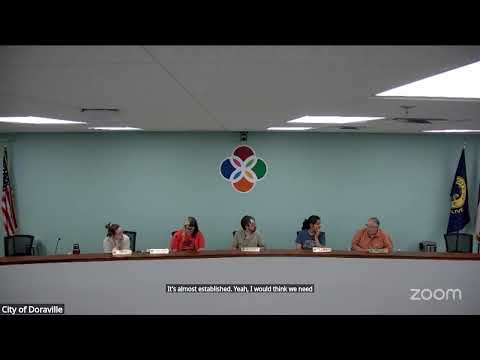
Cecil McClennon, Doraville city attorney, spent the commission’s June meeting outlining how commissioners should make decisions on public art and how to avoid legal problems.
McClennon said most of the Art Commission’s work falls into two categories: legislative determinations — opinion‑based recommendations to the mayor and council — and quasi‑judicial determinations, where the commission must find that specific ordinance criteria are met before approving installations. "When you’re quasi‑judicial, you put on your judge hat," McClennon said, urging commissioners to state on the record why an application meets each ordinance criterion.
The training focused on section 29.3 of the public‑art ordinance, which assigns the commission duties such as developing a plan, appointing committees and reviewing projects for consistency with themes adopted by the mayor and council. McClennon named the adopted themes as "diversity, vitality and community" and said commissioners should evaluate whether a proposed installation advances those themes.
McClennon also warned that routine actions by commissioners can create public‑record obligations: city email that discusses commission business is accessible under open‑records rules, and gathering in a quorum outside posted meetings can trigger open‑meetings violations. He advised commissioners to coordinate social‑media or email communications with staff and to treat recurring city‑related posts as potentially discoverable.
On ethics, McClennon told commissioners to recuse themselves from matters with direct monetary benefit to themselves or a close family member and to be cautious about indirect benefits. "If it’s a personal benefit, you would be able to say, ‘I derived money from it.’ Nah, get out. Just walk out of the room," he said, describing quid‑pro‑quo scenarios as the chief ethical risk.
Commissioners asked about practical issues — for example, whether an Art Commission Facebook or Instagram account would be allowed. McClennon recommended coordinating with staff and, if resources are needed, bringing a short item to the mayor and council for approval. He advised handing routine communications to city communications staff when possible.
The guidance concluded with a reminder about Robert’s Rules and minutes: clear motions and careful minutes reduce ambiguity and the need to reopen items. The attorney offered to take follow‑up questions by phone or email.
The training concluded without a formal vote; commissioners moved on to new business, including a crosswalk mural application and a review of a budget allocation proposal.