Get Full Government Meeting Transcripts, Videos, & Alerts Forever!
Get email alerts on the Building Inspector topic
No spam. Unsubscribe anytime.
Madelia council hires local inspector under flexible 2–4 hour weekly contract
Summary
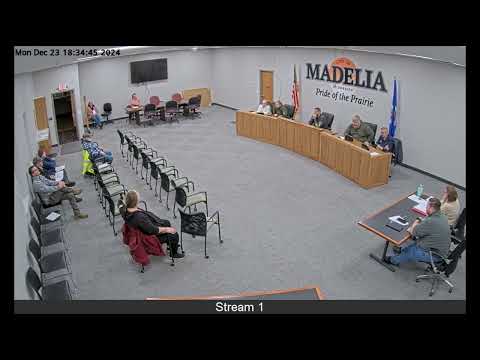
At its workshop the Madelia City Council approved hiring Harry Jennings as the city’s building inspector for 2025 under a one‑year, flexible contract specifying a minimum of two and maximum of four hours per week, citing local customer service and permitting revenue as deciding factors.
The Madelia City Council voted to contract with Harry Jennings to serve as the city’s building inspector for 2025 under a one‑year agreement that specifies a minimum of two hours and a maximum of four hours of service per week. The motion carried unanimously.
Council members said the decision aimed to balance regular oversight with unpredictable permit volume. The chair said the council preferred a flexible package that would avoid dipping into the general fund if permit revenue fluctuates and that the arrangement will be reexamined after a trial period.
Two proposals had been received for the role: Jennings, who was present, and Randy King of Procore (King was described as the current inspector but was not at the meeting). In discussion, council members and the present applicant emphasized customer service and prompt response times as primary selection criteria. Jennings told the council he prioritizes responsiveness, saying he makes himself available to contractors and homeowners and will accept photos and texts to expedite preliminary checks.
Council discussion reviewed local permit revenue figures cited at the meeting: roughly $15,600 in permit fees billed over the prior 10‑month reporting period and $1,518 paid to the current contractor so far (the meeting noted December billings were outstanding). Members debated starting with two hours per week versus four; supporters of four hours said it would align pay with neighboring services, while others favored the two‑to‑four‑hour flexible approach to reduce budget risk.
The council directed staff to implement a one‑year contract with the agreed minimum and maximum weekly hours and to revisit the arrangement as permit volume and service needs become clearer. The contract award was recorded as a formal motion and approved during the council segment of the meeting.