Get Full Government Meeting Transcripts, Videos, & Alerts Forever!
Get email alerts on the Rv Storage Policy topic
No spam. Unsubscribe anytime.
Clewiston commission reopens debate on RVs and storage rules, seeks workshop to refine ordinance
Summary
Commissioners discussed a proposed amendment to limit recreational vehicle storage on private lots, debating setbacks, hard‑surface requirements, time limits and enforcement challenges; staff recommended more detailed drafting and a workshop with planning staff and P&Z before returning with a revised ordinance.
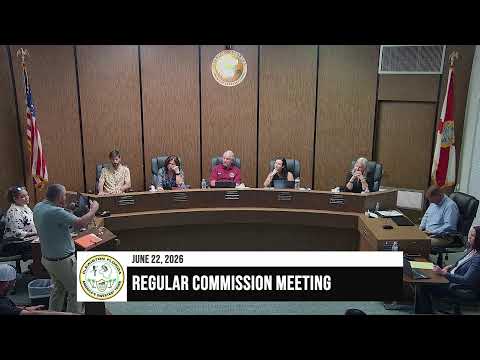
The Clewiston City Commission on June 22 debated a proposed ordinance to restrict storage of recreational vehicles (RVs) and similar equipment on private residential lots, with staff saying the change would give code enforcement more authority over the small number of problematic properties.
City staff presented the draft amendment and said it would generally require RVs to be stored behind the front of the house or on a hard surface such as concrete or asphalt, suggested a 6‑foot setback from sidewalks or property lines and proposed time limits for short‑term presence. The staff member who opened the discussion said the city documented 29 RVs on residential lots and estimated that 80–85% of those would not be affected by a reasonable ordinance but that the city currently “doesn’t have any teeth” to address the few that are persistent nuisances.
Several commissioners and staff urged a cautious, incremental approach. One commissioner recommended limiting changes to yard‑size standards, a side‑yard placement requirement and a single‑RV allowance per property; another official suggested allowing alternative hard surfaces such as compacted millings or 57 rock if edged properly. Concerns centered on enforceability: commissioners noted privacy fences, temporary moves to avoid inspections, and magistrate hearings where respondents have denied living in vehicles.
Code enforcement indicated a 14‑day mitigation window for violations and described a 72‑hour inspection protocol to establish continuing noncompliance. Commissioners also discussed whether the RV rules should remain in Chapter 50 (mobile homes) or be moved to a separate chapter on storage on private property.
The commission did not adopt the draft at the meeting. Multiple members asked staff to convene a workshop that includes planning and zoning representatives, code enforcement and legal counsel to reconcile definitions (for example, whether a recreational vehicle over 40 feet is treated differently), to decide acceptable surfaces and setbacks, and to prepare a single revised ordinance for later consideration.
The commission’s next procedural step is for staff to schedule the workshop and return with a revised draft that addresses enforcement details, lot‑size thresholds, and whether related code sections must be amended.