Get Full Government Meeting Transcripts, Videos, & Alerts Forever!
Get email alerts on the Property Taxes topic
No spam. Unsubscribe anytime.
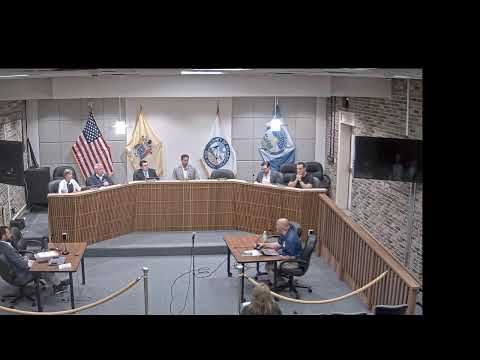
Holmdel tax assessor reviews assessments, inspections and how PILOTs affect local bills
Summary
Tax assessor Eric Aguilar explained how Holmdel’s property tax levy is divided (school, municipal, county), how annual mass-appraisal and inspections work, and why payment-in-lieu-of-tax (PILOT) agreements can change taxpayers’ shares; he cited the Bell Works and Vonage cases as examples.
Eric Aguilar, Holmdel’s tax assessor, presented a detailed explanation of how property assessments and PILOT (payment-in-lieu-of-taxes) agreements affect municipal and school tax bills.
Eric told the committee that in 2025 Holmdel’s municipal portion accounted for roughly 17.4% of the tax levy and that the school district made up about 69% of a typical bill. "For every $1 of property taxes that a Holmdel resident pays, 86¢ stays completely within the town," he said, explaining the local split and county share. He walked through mass-appraisal methods, noting the town is required (as part of the county assessment demonstration program) to reassess annually and to inspect each property once every five years; this cycle inspects properties north of the tracks.
On PILOT agreements, Eric defined a pilot as a redevelopment financing tool authorized under New Jersey law used to make otherwise marginal projects financially feasible. He said Holmdel currently collects about $7.3 million in pilot revenue and illustrated with a Bell Works case study: when the former Bell Labs building was redeveloped, the tax contributions shifted from a near‑dominant corporate ratable to a mix of pilot payments and new residential taxes, producing a net gain in municipal receipts compared with vacancy.
Eric also modeled a hypothetical to show local impacts: if a $50 million property moved from exempt status to taxable it would generate substantial school and municipal revenue; by contrast, a PILOT can reduce conventional ratables but still bring predictable revenue and, if structured correctly, may produce net gains for property owners and the township. He cautioned that whether to approve a pilot depends on feasibility absent subsidies and potential net costs such as additional service needs (schools, emergency services).
What residents asked: Several residents asked about inspection notices and how appeals are handled; Eric said county tax-board appeals vary but many are resolved by correcting data on the property record card. He estimated county tax-board filings and said roughly half of appeals that require data correction are resolved in the taxpayer’s favor.
What’s next: The assessor’s slide deck, including supporting links and charts, will be posted on the township website for public review.