Get Full Government Meeting Transcripts, Videos, & Alerts Forever!
Get email alerts on the Hospital Pricing And Consolidation topic
No spam. Unsubscribe anytime.
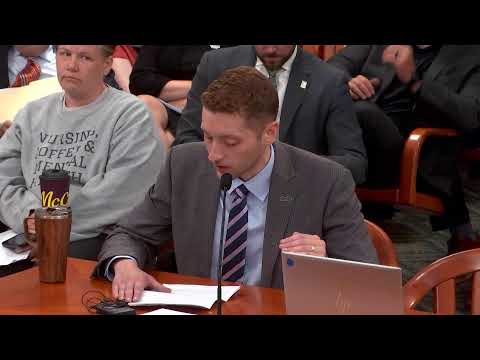
House committee adopts substitute and hears debate on hospital pricing, consolidation, and rural grants
Summary
The House Government Operations Committee adopted an H‑1 substitute for House Bill 6116 and heard hours of testimony on a package (HB 6116–6119) that would create a Hospital Cost Review Board, require nonprofit hospital reporting, limit some consolidations and noncompetes, and fund rural-hospital grants; witnesses warned of possible closures and job losses while sponsors argued for accountability and lower costs.
The House Government Operations Committee adopted an H‑1 substitute for House Bill 6116 and then heard testimony on a multi-bill package aimed at curbing hospital prices, increasing nonprofit transparency, limiting consolidation and noncompete clauses, and creating a grant fund for rural hospitals.
Committee members voted 3–2 to adopt the H‑1 substitute, advancing the bill’s pricing-enforcement and public-reporting changes before hearing testimony from sponsors, hospital leaders, purchasers and small-business advocates.
Proponents and sponsors told the committee the package is intended to improve affordability and public accountability. Representative Harris, a sponsor, described the bills as tools to force transparency and to ensure that price increases “are tied to higher costs, not simply passed on because they can.” He said House Bill 6116 would create a five-member Hospital Cost Review Board — appointed by the governor and legislative leaders — that would review nonprofit hospitals’ annual reports, evaluate proposed price increases, enforce pricing provisions and, after notice and a 30‑day cure period, impose assessments equal to a hospital’s nonprofit tax exemption if violations persist. Harris also described House Bill 6117 as creating a Healthcare Cost Reduction Fund to provide grants for rural hospitals experiencing sustained financial hardship, and House Bill 6119 as limiting certain physician noncompete agreements for very large systems.
Supporters argued the measures are a response to rapidly rising hospital prices and consolidation. Brett Jackson of the Michigan Health Purchasers Coalition told the committee that hospital price inflation is a driver of rising premiums and out‑of‑pocket costs and cited statewide figures: “In 2024, the average hospital operating profit margin among Michigan hospitals reached 16%,” he said, and added that many employers and employees are already struggling to cover care. Jacob Manning of the Small Business Association of Michigan said nearly half of surveyed employers ‘‘say that if health care costs increases continue as they have been, it will be only 1 to 3 years before they are forced to consider dropping insurance coverage.’’
Hospital leaders warned the committee the package as written could harm rural and independent hospitals. Adam Carlson of the Michigan Health & Hospital Association said the bills’ combined effects (a 10% target reduction in some pricing, caps indexed to inflation and benchmarking) could push more hospitals into negative margins and lead to service reductions and job losses. ‘‘If this legislation goes into effect, starting right away, we’ll have 54 hospitals who will be spending more money than they take in,’’ Carlson said, adding the association’s analysis projects statewide revenue losses of roughly $2.3 billion and thousands of potential workforce impacts. Ben Frederick, speaking for Memorial Healthcare (a rural independent hospital), described his facility’s role as the primary provider across multiple counties and warned that the package’s penalties would be funded by assessments on peer hospitals while grants to rural hospitals would only be available after hospitals are judged to meet strict negative‑margin criteria: ‘‘Grant funds provided in the bill only exist if peer hospitals are penalized or taxed, and only through penalties,’’ he said, arguing that in practice that could accelerate closures or sales.
Sponsors and witnesses disagreed over several key policy choices and data points. Committee members repeatedly pressed sponsors and witnesses for comparative evidence from other states, details about how grants would be funded and targeted, and whether insurers would be required to pass savings to consumers. Representative Fitzgerald asked whether a 10% reduction in hospital prices — which would affect roughly 31% of health‑care spending represented by hospitals — would be worth the risk of closures in some communities. Sponsors offered to provide additional reports and said they had narrowed eligibility definitions to prioritize truly rural hospitals.
The package includes a range of provisions described in testimony: HB 6118 (the Health Facility Consolidation Prevention Act) would require approvals for most mergers and acquisitions, set standards for approval, impose a 2% price decrease at the point of acquisition and limit later price increases to the consumer price index; it also would create a consolidation‑prevention assessment to seed the rural grants fund. HB 6119 would prohibit certain noncompete agreements for physicians at very large systems above a specified size. Sponsors said enforcement would begin with notice and a cure period; only persistent noncompliance would trigger financial assessments.
Committee members heard multiple concrete claims that are contested within the hearing record: hospital associations offered projected job‑loss and closure figures tied to their modeling of the bills; sponsors cited large tax exemptions for nonprofit hospitals and argued that accountability is appropriate; rural hospital witnesses emphasized fixed costs and community dependence, and purchasers urged structural steps to restore competitive pressure.
The committee recorded one formal vote at the hearing: adoption of the H‑1 substitute for HB 6116 (motion moved by Representative VanderWaal and carried on the roll call 3–2). After receiving the last testimony and entering the record for public testimony cards, the chair adjourned the committee with no further business.
What’s next: Committee sponsors and staff indicated they will follow up with additional data requested by members (comparative state board evidence, updated financial reports, and details on grant‑eligibility and funding scenarios); the transcript records offers from sponsors and witnesses to supply the committee with more detailed analyses.
Sources: testimony and Q&A, including Representative Harris (bill sponsors), Adam Carlson (Michigan Health & Hospital Association), Ben Frederick (Memorial Healthcare), Brett Jackson (Michigan Health Purchasers Coalition) and Jacob Manning (SBAM).