Get Full Government Meeting Transcripts, Videos, & Alerts Forever!
Get email alerts on the Pension Eligibility topic
No spam. Unsubscribe anytime.
Probation officers, 911 dispatchers and forensic scientists urge earlier retirement, retroactive credit at LCPR work group
Summary
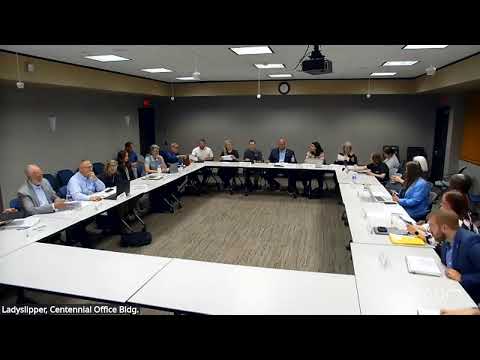
Representatives for probation officers, public‑safety telecommunicators and forensic scientists told the LCPR work group they should be included in any new pension path, asking for earlier unreduced retirement ages, benefit multipliers similar to corrections, and retroactive service credit to avoid two tiers.
Representatives of probation officers, 911 telecommunicators and forensic scientists urged the Legislative Commission on Pensions and Retirement work group to create a narrowly defined pension path that reflects the public‑safety duties these occupations perform.
"Good afternoon. My name is Nicole Kern and I'm the director of corrections in Morrison County," Nicole Kern said while presenting for probation officers, adding that the group represents probation and corrections agents across all 87 counties and that "we supervise over 97,000 people in the community." Kern and Dr. Tammy Joe Leeberg described field duties, recruitment challenges and the consequences of the end of the so‑called "rule of 90," arguing that older employees should not be forced into unsafe field work.
A telecommunicator representative told the group: "First, we ask for a statutory definition of public safety telecommunicator that accurately reflects our role," and requested inclusion of all qualifying public‑safety answering points (PAPs), an unreduced retirement age and a 2.2% benefit multiplier aligned with other public‑safety plans. The representative also urged retroactive credit for employees who already performed qualifying service.
Forensic science presenters described a small, highly specialized workforce. "There are fewer than 350 forensic scientists and related professionals across Minnesota," Josh said, and explained long training cycles, high psychological stress and the need to treat forensic professionals equitably with other public‑safety roles.
Speakers from the worker groups repeatedly asked for three technical features in any new plan: clearly defined eligibility by job classification, transition rules that avoid leaving long‑serving employees behind, and actuarial clarity on combined service credit and vesting. Multiple presenters stressed willingness to serve on subcommittees to resolve technical questions.
Work‑group staff and retirement‑system officials told the group those technical questions are central. PAR and MSRS staff said the core questions are how to define eligibility precisely, how to price and pre‑fund any past‑service credit, and whether separate subplans or a subband within an existing plan are the most stable approach. The work group was pointed to an upcoming actuary presentation and next steps: the actuary study will be presented publicly to the board on Aug. 14 and the working group will reconvene on Aug. 18 at 1 p.m.
The meeting left unresolved the central tradeoffs the presenters framed: worker groups sought earlier unreduced retirement ages and retroactivity to address recruitment, retention and safety; administrators and employers emphasized that any benefit enhancements must be actuarially modeled, pre‑funded or otherwise tightly scoped to avoid shifting costs to other plan members.