Get Full Government Meeting Transcripts, Videos, & Alerts Forever!
Get email alerts on the Mental Health Screening topic
No spam. Unsubscribe anytime.
Lawmakers, providers clash over bill to shift mental-health screening roles and codify a 3-hour standard
Summary
A contested bill (HB 60 22) that would allow Medicaid health plans to conduct preadmission mental-health screenings and codify a 3-hour screening expectation drew opposition from community mental-health leaders who warned it risks diluting clinical qualifications and does not address inpatient bed shortages.
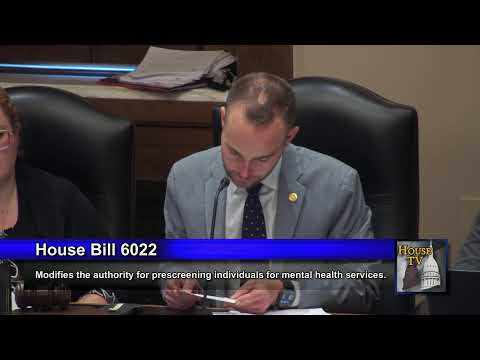
A Michigan House Rules Committee hearing on House Bill 60 22 on Tuesday turned into a substantive debate about who should conduct preadmission mental-health screenings and how to prevent long waits in emergency departments.
Representative VanderWaal and Christine Shearer, deputy director of the Michigan Association of Health Plans, said the bill aligns statute with the Michigan Department of Health and Human Services' proposed mental-health framework. The sponsors said HB 60 22 would allow Medicaid health plans to conduct preadmission screenings for enrollees when they are contractually responsible for the care and would preserve the 3-hour screening expectation used in many CMH contracts.
"The legislation is intended to align state statute with the operational changes directed by MDHHS under this preadmission screening initiative," Shearer told the committee, adding that if a CMH cannot screen a patient within three hours, "another clinically qualified professional could conduct the preadmission screening." Shearer said the change would improve timely access and align financial responsibility with operational duties.
CMH Association witnesses pushed back. Alan Bolter warned the bill could expand authority to conduct screenings without preserving existing licensed-clinician staffing requirements, and he said the measure may add regulatory burden rather than solve access problems.
"The reason why individuals are sitting in hospital emergency rooms for hours or days on end is because there's no place for them to go," said Dave Lowe of the CMH Association, who cited MDHHS' bed-inventory figures showing a large gap between target bed pools and available specialty beds. Lowe testified the association's data show CMHs complete the 3-hour assessments nearly 99% of the time.
Committee members pressed both sides on specifics: whether the bill changes current rule promulgation, how hospitals would determine when the three-hour clock begins, what clinical qualifications would be required for delegated entities and what would happen if the department's broader mental-health framework is paused by budget language. MAHP and the sponsor said the bill simply aligns law with likely operational responsibilities and that language can be amended to address concerns; CMH witnesses said the text leaves unclear who would be clinically qualified and warned about delegations to third-party vendors or call centers.
What proponents said: Shearer argued the bill reduces ambiguity when the department assigns financial responsibility through the mental-health framework, allows timely clinical screening when CMHSPs are unable to respond, and retains important patient protections. "If a preadmission screening entity is unable to complete an assessment within the 3 hours of notification, another clinically qualified professional could conduct the assessment," she said.
What opponents said: Bolter and Lowe argued the legislation removes safeguards that ensure licensed clinicians perform screening, risks delegating high-stakes decisions to nonclinicians, and does not address the underlying shortage of specialty beds that leaves patients stranded in emergency departments.
Next steps: The committee accepted testimony and witness cards; the bill was recorded as having been heard and will proceed according to the House rules process. Stakeholders on both sides indicated willingness to discuss statutory language to clarify staffing qualifications and appeals or challenge processes.
Speakers quoted in this article appear in the committee record and were included in the meeting's witness list.