Get Full Government Meeting Transcripts, Videos, & Alerts Forever!
Get email alerts on the Water Rates topic
No spam. Unsubscribe anytime.
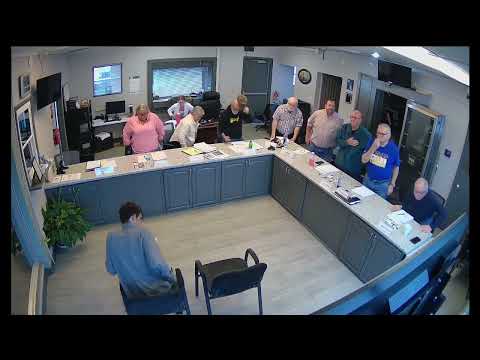
Waynesfield council tables proposed water and sewer rate ordinance after lengthy debate
Summary
Council members raised errors in the draft exhibits and objected to a front-loaded residential increase proposed for 2027; they voted to table ordinance 26-6-1 and scheduled a special July meeting for revised options and additional analysis.
Waynesfield officials spent the bulk of their meeting on a contentious review of draft ordinance 26-6-1, a proposed overhaul of the village's water and sewer rates based on a consultant's study. After identifying numerical errors in the draft exhibits and disagreeing over how fast the increases should be phased in, council voted to table the ordinance and asked staff to return with alternative spread-out options before a special July meeting.
Council members said the utilities committee had reconvened to re-examine the rate study and recommended a 25% reduction to the proposed residential increase, but multiple members raised detailed concerns after examining the ordinance exhibits. One council member noted that an institutional fee described as an "outside" charge appeared to be for inside service and flagged several small numeric mismatches in exhibit pages, calling for corrected spreadsheets before any vote.
A central point of contention was the schedule of increases. Under the consultant's recommended schedule the residential flat rate would rise sharply in 2027, producing a roughly $20-per-month spike in the first year for a typical customer before smaller increases in later years. Several council members said that pattern would unduly burden residents who are already financially strained and asked for options that spread revenue needs more evenly across multiple years.
Staff and the village's water operator explained that the study aims to build reserves to fund predictable equipment replacement (meters, pumps, valves, hydrants) and to preserve eligibility for certain state and federal funding programs that require utilities to demonstrate adequate cost recovery. The operator also cautioned that a major equipment failure without funds set aside could force emergency borrowing at higher interest rates or outside intervention by state regulators.
Council members proposed several alternative pacing options during the discussion, including splitting the early increases across 2027 and 2028 and modeling a three-year or five-year phase-in. One member asked the consultant to provide two or three alternate schedules in writing and to correct the exhibit errors so council and the public could compare outcomes. Another member suggested a committee-of-the-whole or a special council meeting so all members could work through numbers together and receive corrected packet materials in advance.
After extended discussion, a motion was made to table the ordinance. The motion carried; council instructed staff to return revised proposals and to publish updated materials before a special meeting expected in July. No final rate increase was adopted at this session; the decision was postponed to allow further review and public transparency.
The council also discussed related operational items during the meeting, including whether to open the new splash pad now or delay activation until seeded grass establishes, noting that the pad pumps to wastewater and does not recirculate water. Several members linked the water-use effects of the splash pad and meter replacement costs to the broader rate conversation.