Get Full Government Meeting Transcripts, Videos, & Alerts Forever!
Get email alerts on the Career And Technical Education topic
No spam. Unsubscribe anytime.
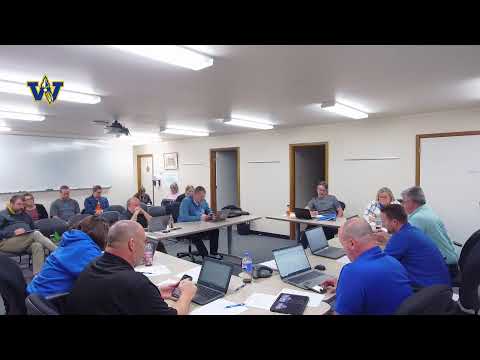
Wapello district outlines DECAP plan, new state rules tighten work‑based learning definition
Summary
District staff presented the District Career and Academic Plan (DECAP), explained new state work-based-learning definitions that require industry-recognized credentials or verified internships, and reported a 60.1% postsecondary-readiness measure under the revised state indicators.
District staff presented the Wapello Community School District's District Career and Academic Plan (DECAP), describing it as a K–12 roadmap for career development and individual academic plans (IAPs) that begin in eighth grade. The presenter explained the DECAP’s seven evaluation sections and five essential components, and said copies of students’ IAPs are kept in files and sent home to parents.
The presenter described recent state changes to work-based learning: the state now counts only specific categories—school-based enterprises tied to industry-recognized credentials (IRCs), pre-apprenticeships, apprenticeships, internships and verified student-learner programs—rather than any classroom speaker or single-event activity. The change will require more verification and paperwork but, the presenter said, will increase the value of credits students earn in high school.
Under the new postsecondary-readiness indicators, Wapello’s metric sits at about 60.1 percent; the presenter noted that the district has reduced its percentage of graduates who need remedial coursework from around 16% to 13% in recent years. The district highlighted partnerships with Southeast Iowa Community College for CTE pathways (welding, diesel mechanics, nursing and related programs) that will allow eligible students to spend part of the day on college-level CTE coursework and potentially graduate with credentials.
Board members asked how many area districts run similar programs and how funding or travel logistics would be handled. Staff said districts vary; some host programs in-district while others require travel. The DECAP will be finalized and provided to board members for review.