Get Full Government Meeting Transcripts, Videos, & Alerts Forever!
Get email alerts on the Measure A Smart Growth topic
No spam. Unsubscribe anytime.
Board approves Measure A smart‑growth allocation after initial defeat and reconsideration
Summary
The Sacramento Transportation Authority debated a formulaic, three‑year set‑aside approach for Measure A Smart Growth funds, questioned a 22.5% transit set‑aside and geographic fairness, and after an initial failed motion the board reconsidered and approved the allocation.
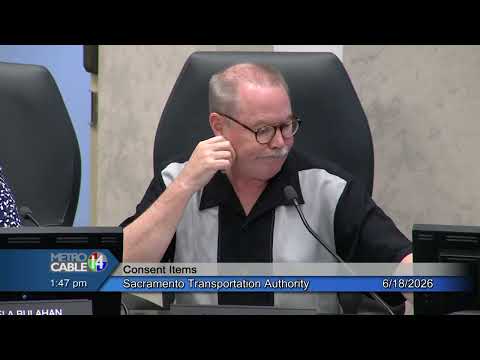
The Sacramento Transportation Authority on June 18 approved a staff proposal to allocate Measure A "smart growth" discretionary funds using a formulaic, three‑year set‑aside approach after directors debated fairness and an initial motion failed.
Kevin Bewsey, STA executive director, told the board the proposal would provide each agency a set‑aside of funds for smart growth projects and that staff considered a longer, multi‑cycle approach. "We're going to provide each agency with a set‑aside of funds to provide for smart growth projects to utilize for these," Bewsey said during the meeting.
One board member objected to the approach and registered a planned "no" vote, arguing the proposal reduced transit's share compared with the Measure A split. The director said a one‑third allocation to transit under Measure A would be preferable and that a revolving, competitive pot can create uncertainty and disincentivize jurisdictions that lack capacity to compete. That director stated they would "register a 'no' vote on this item."
Staff responded that the 22.5% transit set‑aside is consistent with prior local partnership program practice and with the share used in other funding rounds, and defended the formulaic approach as administratively simpler and quicker to deliver funds. Directors discussed tradeoffs between incentivizing aggressive project submissions and ensuring geographic fairness.
After an initial motion to approve Item 5 failed on the first vote, a motion to reconsider passed. With the board reconvened and members updated, another motion to approve was made, seconded and the board approved Item 5.
The action does not change that agencies remain free to use their allocations for priority projects; staff said jurisdictions largely identified projects they believe will qualify. Staff also cautioned that delay could affect grant applications with SACOG funding rounds due in July.
The board moved that Item 5 return to the agenda with the adopted approach; staff will come back with any required implementation steps and to confirm project eligibility and scheduling.