Get Full Government Meeting Transcripts, Videos, & Alerts Forever!
Get email alerts on the Local Government topic
No spam. Unsubscribe anytime.
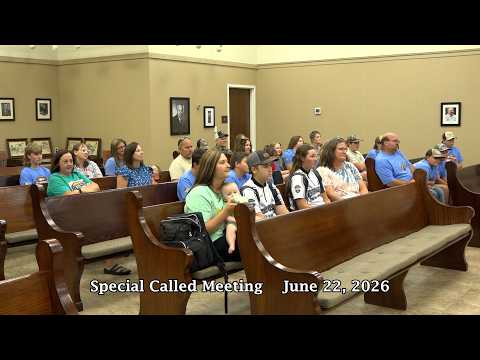
Marshall County Fiscal Court approves routine motions, hears public hearing on $1.3M road funds
Summary
At its June 22 meeting the Marshall County Fiscal Court approved a series of routine motions — including hiring a seasonal road worker, approving a salary schedule effective July 1, and authorizing year-end appropriation transfers — and opened and closed a public hearing on approximately $1.3 million in rural secondary road funds with no public speakers.
Marshall County Fiscal Court approved a slate of routine items during a special called meeting on June 22 and held a public hearing on roughly $1,300,000 in rural secondary road funds; no one spoke during the hearing.
By voice vote the court carried a motion to approve minutes from the June 9 special called meeting, a five-minute recess, and a motion to return and continue business. The court approved a seasonal road department hire — Nathan Knight at $15 per hour effective immediately — and approved postponing several board appointments until the next meeting.
Members reviewed and approved a salary schedule that will take effect for work starting July 1. The court also approved a training incentive for jailer Roger Ford and authorized banners with sponsor logos for a five-movie series and upcoming concerts in the parks program.
Staff reported two pages of year-end appropriation transfers, largely to cover payroll and higher-than-budgeted health insurance costs; the transcript noted health insurance increases of about 13% as a factor in the transfers. The court approved the transfers by voice vote and reported no bank transfers.
At about 9:30 a.m. the court opened a public hearing on the county's plan to receive approximately $1,300,000 in rural secondary road funds and asked whether anyone wished to speak for or against the court using state-derived tax revenues on roads. Hearing none, the court closed the public hearing by motion.
Why it matters: The approvals set the county's personnel and pay structure for the fiscal year beginning July 1 and finalize year-end accounting moves related to payroll and benefits. The public hearing addresses how the county may use state-derived rural road funds; no public input was recorded.
What happens next: The court will proceed with the approved hires, salary schedule, parks sponsorships, and appropriation transfers; staff will post or record any subsequent action on the rural secondary road funds if public comment or formal decisions follow.