Get Full Government Meeting Transcripts, Videos, & Alerts Forever!
Get email alerts on the Affordable Housing topic
No spam. Unsubscribe anytime.
Nonprofit presents plan for new senior affordable housing at Trinity House site
Summary
Columbia Catholic Housing for the Elderly presented a conceptual plan to add senior affordable units adjacent to Trinity House, citing a combined wait list of 372 and asking council for early support on zoning, financing and potential council endorsements.
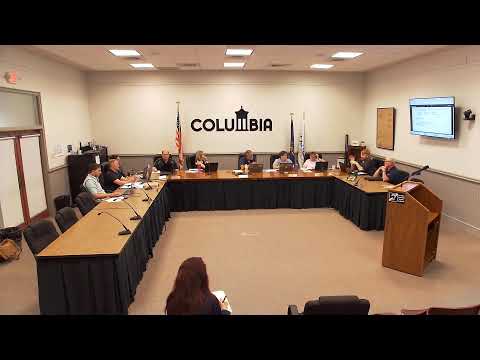
Columbia Catholic Housing for the Elderly introduced a conceptual plan Tuesday to develop new senior affordable housing contiguous to Trinity House and St. Peter Apartments, a project the board says would respond to a multi-year wait list and align with the borough comprehensive plan.
Paul Nicholas, a board member, described the organization’s history (established in 1970) and presented data showing 372 people on the combined wait list for Trinity House and St. Peter Apartments, with roughly 25% of applicants from Columbia. The board proposed assembling roughly 4.34 acres from contiguous parcels — including Mil Street right-of-way considerations and land across Shauny Run — to create a new building with design choices that emphasize indoor-outdoor access, stormwater upgrades and accessible units.
Nicholas outlined potential constraints: tight downtown parcel geometry, the need to address parking using demonstrated vehicle-ownership rates (approximately 40–43% among existing residents), zoning‑hearing requirements for infill projects, anticipated consultant costs in the hundreds of thousands, and the long timeline for tax-credit financing and capital stacking. He asked council for early feedback, potential help with letters of support for funding applications, and guidance on process steps such as planning‑commission review, zoning‑hearing board engagement and a possible vacation of Mil Street right-of-way.
Council members and residents asked about emergency-access needs, the fire department’s access, impacts to street sweeping and snow removal, and whether Columbia residents would receive any local preference. Presenters pledged to investigate resident-priority mechanisms and to engage fire and emergency services early in the design process.
Council accepted the presentation, requested a copy of the slides for distribution, and agreed that next steps should include planning‑commission review, solicitor input on land transactions, and early coordination with county and state funding partners if the nonprofit decides to pursue tax-credit applications.