Get Full Government Meeting Transcripts, Videos, & Alerts Forever!
Get email alerts on the Zoning And Business Regulations topic
No spam. Unsubscribe anytime.
Kenyon council approves package of zoning and business ordinances, including tattoo and cannabis rules
Summary
On Jan. 14 the Kenyon City Council approved five ordinances amending zoning and business rules — covering accessory buildings, residential performance standards, tattoo/body-art licensing and the city's initial cannabis regulatory framework — and approved publication resolutions for each ordinance.
The Kenyon City Council voted Jan. 14 to adopt a package of ordinances updating the city code on accessory structures, residential performance standards, tattoo and body-art businesses, and cannabis business regulations.
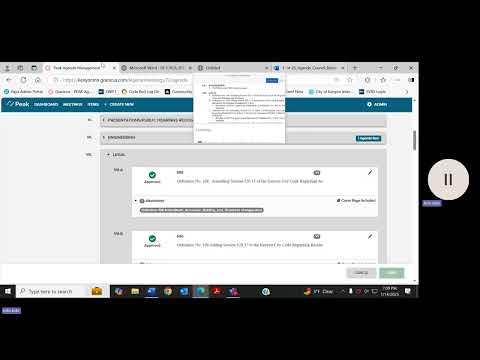
City attorney Scott Rigs summarized the package and led council through roll-call approval for each ordinance. Ordinance No. 108 tightens rules for accessory buildings and structures, including a permit requirement for accessory structures larger than 200 square feet and a cap on total accessory building floor area (the ordinance text in the packet reflected a 1,000-square-foot combined limit). Ordinance No. 109 establishes residential performance standards for R1 and R2 districts. The council approved both ordinances and subsequent resolutions to publish them by title and summary.
Counsel also presented two ordinances related to small businesses. Ordinance No. 110 adds a defined use for a "tattoo parlor" in the C1 downtown commercial district. Ordinance No. 111 sets licensing, operational and time-of-day limits for tattoo and body-art establishments (the published packet cites operating hours from 8:00 a.m. to 10:00 p.m.). Both passed, and the council approved separate publication resolutions for each.
On cannabis regulation, Scott Rigs described Ordinance No. 112 as "a starting point for your ordinance," noting that the state's Office of Cannabis Management had just published rules on a 30-day comment cycle and that the city's ordinance might require adjustments as state rules evolve. The ordinance in the packet limits cultivation to indoor, greenhouse-style operations as a conditional use and establishes distance setbacks: 1,000 feet from schools and 500 feet from daycares, residential-treatment facilities and certain park features. The council approved Ordinance 112 and a resolution to publish it by title and summary.
Council members also discussed who should perform retail registration for cannabis businesses. Staff said the draft ordinance assumes the city would register facilities, but both staff and council indicated a preference to start with a county-led registration process. The council approved a separate delegation agreement sending initial retail registration responsibilities to the county and asked staff to adjust ordinance language to reflect that arrangement.
Actions recorded in the meeting packet and taken on Jan. 14: adoption of Ordinances 108, 109, 110, 111 and 112 and approval of publication resolutions for each; approval of a county delegation agreement for cannabis retail registration.
What happens next: the ordinances will be published by title and summary as required; staff indicated the cannabis rules may be revisited as state administrative rules evolve and after the county begins registration activities.
Speakers quoted or cited in this article are identified by how they appear in the meeting transcript: city attorney Scott Rigs and other city staff who presented the ordinances. Vote tallies were recorded by roll call/voice in the meeting and not fully specified in the transcript packet.