Get Full Government Meeting Transcripts, Videos, & Alerts Forever!
Get email alerts on the Budget topic
No spam. Unsubscribe anytime.
Redwood Coast transit board adopts 2026–27 budget and weighs several service cuts as COVID funds taper
Summary
The RCTA board approved the 2026–27 budget and authorized filing its TDA claim while staff outlined multiple potential service reductions — from shorter weekend hours to eliminating select evening trips — to address a $200,000–$300,000 structural shortfall once one-time COVID funds end.
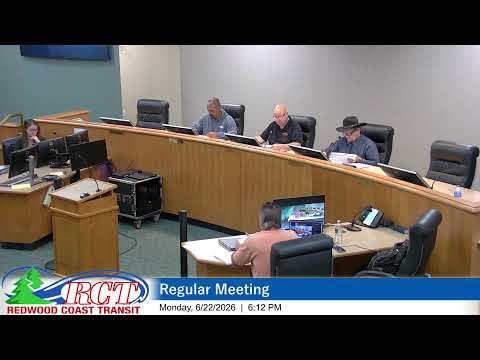
The Redwood Coast Transit Authority board voted to adopt the agency’s 2026–27 budget and authorized staff to file the agency’s TDA claim, while staff outlined options for service reductions to address a structural deficit once one-time COVID funds are exhausted.
Joe, an RCTA staff member, told the board the agency faces “a tough budget season” with operating revenues largely stagnant and costs rising, producing a structural deficit estimated at about $200,000–$300,000 per year. He said the agency is temporarily covering part of that shortfall with roughly $400,000 per year in one-time COVID relief that is expected to continue for only a few more years.
To reduce costs with minimal ridership impact, staff proposed a menu of smaller and larger service changes drawn from last year’s short-range transit plan. Smaller proposals included shortening Saturday and holiday local service in Crescent City from 8 a.m.–5 p.m. to 10 a.m.–4 p.m. (saving roughly three driver hours per day and an estimated $11,000 a year at the agency’s $67/hour variable rate), trimming late-afternoon weekday spans on routes 1 and 3 (saving about $12,500 annually), and removing one low-ridership 5:30 p.m. trip on Route 4 (about $8,300 annual savings).
Staff also laid out more consequential options: eliminating a short evening Crescent City–Clamoth trip that averages about five riders (roughly $26,000 in annual savings) and the option to cut all Saturday and holiday service, including Route 20 — a change that staff estimated could save more than $100,000 but would significantly reduce weekend mobility and connections to north-end transfer partners.
Joe said the agency already deferred its usual summer expansion this year, a move that saved roughly 1,400 revenue hours or about $100,000, and that Transdev will seek to eliminate one local leadership position, saving an estimated $70,000.
Why this matters: staff emphasized that the one-time COVID funds have been masking the underlying deficit and that the board must choose between maintaining service levels or accepting targeted or broader cuts once that funding disappears.
Votes at a glance: - Resolution 2025-26-09, adopting the fiscal year 2026–27 RCTA budget: motion moved (speaker not specified in the record); recorded votes of “yes” from Director Boures and Chairman Short (other voting board members recorded generically as “Director” in the transcript). Outcome: approved. - Resolution 2025-26-10, authorizing filing of RCTA’s fiscal year 2026–27 TDA claim: motion moved (speaker not specified); recorded votes of “yes” from Director Borges, Director Alman and Chairman Short. Outcome: approved.
Board members asked questions about connectivity with partner operators. A board member asked whether Euro Tribal Transit remains in service and whether Route 20 connections would be affected; staff said Euro Tribal Transit is still running but does not publish schedules and requires five riders to operate certain Clamoth–Crescent City runs, raising concerns about reducing services that support transfers.
Next steps: staff will bring the outlined options back to the board at the August meeting with the aim of implementing fall service changes at the end of September if the board approves them.