Get Full Government Meeting Transcripts, Videos, & Alerts Forever!
Get email alerts on the Religious Instruction topic
No spam. Unsubscribe anytime.
Residents ask Waterloo board to allow weekly off-campus religious instruction via LifeWise
Summary
Two residents urged the Waterloo Community School District to adopt a policy permitting parents to excuse students weekly for off-campus LifeWise Academy religious instruction, citing a 1952 Supreme Court ruling and Iowa law; the board took no action during the public-comment period.
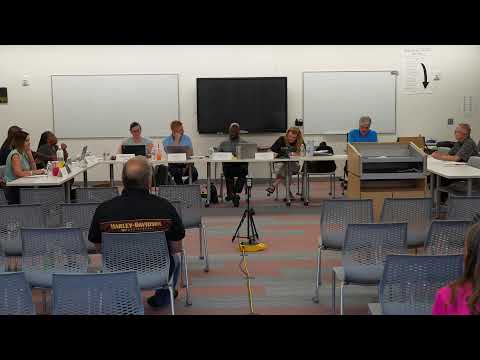
Residents asked the Waterloo Community School District Board on Aug. 12 to consider permitting "release time" religious instruction provided by LifeWise Academy.
Matt Johnson, who identified his address as 3244 Crane Creek Road, asked the board to adopt a policy allowing parents to permit their children to attend off-campus religious instruction one hour per week. He said a 1952 Supreme Court ruling the speaker named "zorak versus claing" affirmed that such programs can be constitutional when privately funded, held off school grounds and voluntary. Johnson described LifeWise as a nationwide nonprofit operating programs he said reach "about 329 public schools across 13 states with over 36,000 students" and requested an opportunity for the LifeWise steering committee to present additional details to the board.
Sarah Bazinsky, who identified her address as 4735 Luxley Drive, told the board she supports the program and emphasized character-building and mental-health benefits she said LifeWise lessons provide. "We are called to live differently to love our neighbor as ourselves," she told the board, and said LifeWise would be offered at no cost to the district.
Board members did not take action on the request during the meeting; the comments were recorded during the public-comment period. The board may refer the matter to staff or return it on a future agenda for a formal policy discussion and legal review.