Get Full Government Meeting Transcripts, Videos, & Alerts Forever!
Get email alerts on the Land Use Special Use topic
No spam. Unsubscribe anytime.
Aurora public hearing on Twin Elm campground draws neighbors' safety concerns and preservation arguments
Summary
At a June 22 town board public hearing, developers and supporters argued a proposed wellness campground at the historic Twin Elm Estate would preserve the mansion and boost tourism, while nearby residents raised traffic, parking, noise and property-value concerns; the hearing closed at 7:24 p.m. with no immediate decision.
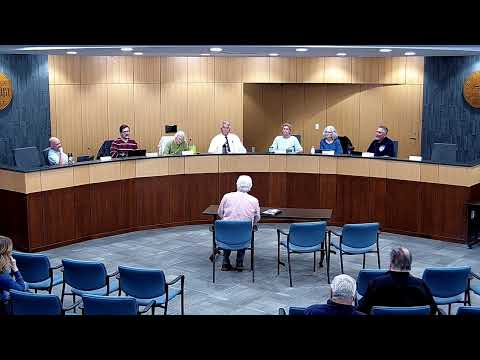
The Town Board of Aurora closed a public hearing on June 22 over a special use permit application to convert the historic Twin Elm Estate at 1196 Big Tree Road into a small wellness-focused campground.
Project attorney Peter Sorggy told the board the application seeks a special use permit and site-plan approval for roughly 14 developable acres of an 83-acre property, with 69 acres preserved under a conservation easement. "You could hate the project, but if it meets the criteria, your job is to approve the project," Sorggy said, framing the board's role as applying the zoning code's special-use standards rather than exercising unfettered discretion.
Supporters said the reuse would preserve a deteriorating mansion and provide economic benefits. Mark Warren, who lives in the village, described the proposal as an adaptive reuse that could protect the historic fabric: "This is one of the jewels in the crown — properties like this don't take care of themselves," he said. Dr. Jennings of Carda Health, an operator on the property, said the site has been in disrepair and that carefully managed retreats could respect neighbors while saving the buildings.
Neighbors who live adjacent to the property spoke forcefully about safety and neighborhood impacts. Joe Quinn, whose house is about 35 feet from part of the proposed project, said he gathered petitions from immediate neighbors and cited a local accident history near the 28A/400 approaches, calling the corner "a blind curve" and warning the project could change the area's residential character. "This is going to change the character of the whole neighborhood," Quinn said.
Other residents pressed the applicant on traffic, parking, drainage and the risk of eventual expansion beyond the proposed seasonal lodging. Several speakers said the site had previously been used for a local business (Carda Health) and that commercial activity and weekend events there had already prompted concerns about parking and early-morning deliveries.
The applicant team said it has provided traffic studies, revised building plans (reducing the formerly enclosed lodge to an open-air facility that seats roughly 60–70), prepared a stormwater pollution prevention plan and added fencing at the maximum allowed height to reduce light intrusion. Rachel Kjookuski, identified as president of Carer Development Group and the project's owner, said the team had held tours and mailed neighbors; she also noted that the planning board unanimously recommended approval (6–0) before referral to the town board.
The hearing record included written support: letters were read from Julie Tyrone and from Victoria Sturman on behalf of the Greater East Aurora Chamber of Commerce, which cited potential tourism and small-business benefits. Multiple residents, however, said petitions and police-report summaries they collected were not reflected in the developer’s submission and asked the board to weigh direct-neighbor impacts heavily.
Supervisor closed the public hearing at 7:24 p.m.; the board then proceeded to its regular agenda. No final vote on the special use permit was recorded in the hearing; the application remains under consideration by the town board.