Get Full Government Meeting Transcripts, Videos, & Alerts Forever!
Get email alerts on the Budget topic
No spam. Unsubscribe anytime.
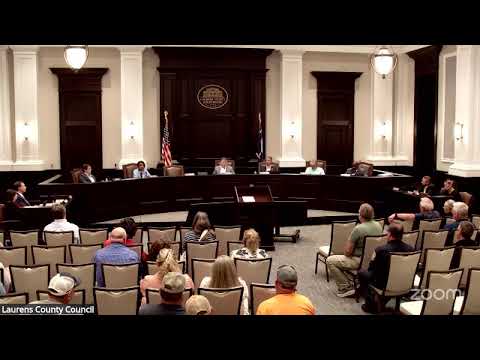
Laurens County Council adopts FY2026–27 general operating budget; millage rises after reassessment
Summary
Laurens County Council approved Ordinance 107, the FY2026–27 general operating budget, on third reading after a public hearing; council cited reassessment, use of three-year unused millage and personnel costs as drivers of a net millage increase and a 3% cost‑of‑living adjustment for staff.
Laurens County Council voted to adopt Ordinance 107, the county’s FY2026–27 general operating budget, after a public hearing and staff presentations explaining the numbers behind the proposal. The ordinance passed on third reading in a 5–2 vote; Councilmen Brownley and Lane recorded the two no votes.
The county administrator and finance director told the council and the public that a 13% countywide increase in taxable value (to roughly $256 million) from the five‑year reassessment, combined with use of previously unused millage from prior years, produced the revenue picture that informed the millage calculation. Finance Director Casey Favvens said staff relied on the statutory “look‑back” for unused millage and explained that the approximately 10% figure cited in the ordinance represents millage the county had not used in prior years: "Under the statute you can go back three years of unused millage... that 10% is from the millage we haven't used in the three previous years to make the budget balance," Favvens said.
Administrators outlined key budget choices: a recommended 3% cost‑of‑living increase for eligible employees (with longevity steps), selective additions to staffing (administration recommended nine of 24 requested full‑time positions and two of five requested part‑time positions), and a reduction in the conservative adjustment for collection rates from 4.5% to 2%. Those choices, officials said, produced a balanced general fund of about $42–42.5 million and avoided using deficit‑reduction reserves.
At the public hearing, residents asked about the county’s authority to exceed the statutory allowable index and whether a supermajority would be required; staff and county counsel explained the county relied on the rollback/look‑back provisions and said the council’s ordinary voting rules applied. The reassessment itself, the assessor and administrators emphasized, does not directly raise taxes — the council’s millage decision does. The county assessor gave instructions on the appeals process and highlighted a Sept. 8 deadline for reassessment appeals.
Council members who opposed the budget said their votes reflected concerns about tax impacts on residents; supporters said the budget prioritized employee pay and essential county services while preparing for revenues from new construction expected to come online next year. The county administrator and council said staff will follow up with residents who raised questions about specific lines, appeals, impact fees and service coverage.
The ordinance took effect pending standard post‑adoption steps; council also noted several related capital projects and reminded residents how to contact staff about appeals or further clarifications.