Get Full Government Meeting Transcripts, Videos, & Alerts Forever!
Get email alerts on the Transportation Access topic
No spam. Unsubscribe anytime.
Developmental Disabilities Council urges expanded rural transport access, highlights voucher and volunteer pilots
Summary
State Developmental Disabilities Council staff told the Cache County Council that transportation barriers prevent many people with intellectual and developmental disabilities from reaching medical care, groceries and community life; presenters recommended vouchers, mobility management and a new volunteer pilot and described grant opportunities (typical awards $10k–$100k; one open grant ~ $50k).
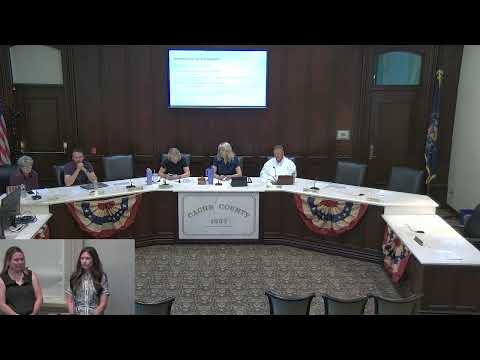
The Utah Developmental Disabilities Council told the Cache County Council on Thursday that lack of accessible, affordable transportation leaves many people with intellectual and developmental disabilities unable to reach medical appointments, buy groceries or participate in community events. Elizabeth Osagera, the council’s executive director, said transportation is one of four priorities in the Council’s 2022–2026 state plan and that the council uses public input and data to set those goals.
"Transportation can make or break that for a lot of individuals," Osagera said, explaining the council’s federally funded role and the statutory guidance of the Developmental Disabilities Assistance and Bill of Rights Act. The council is housed within the Utah Department of Health and Human Services and receives federal funds through the Administration for Community Living, presenters said.
Why it matters: Presenters said the problem is particularly acute in rural counties. They cited national research showing 145 standalone services collectively cost $781 million and noted that about 40% of rural counties do not offer any form of public transit. When public systems are absent, Medicaid waiver rules can require providers to deliver transportation as part of services, increasing costs, the presenters said.
Bragg’s mobility manager, Alyssa Cronin, described local practices that Cache County already uses and could expand: travel training, caller-ride/paratransit application assistance, a lifeline voucher program that reimburses volunteer or family drivers for trips to essential services, and mileage reimbursement. Cronin said Bragg partners with Connect Transit on funding and that Susie's Senior Companionship Services, a local nonprofit, will contract to accept reimbursement as a paid driver-provider under a pilot volunteer program starting this fiscal year in July.
"We have the mileage reimbursement," Cronin said, describing a program that once generated only a few monthly trip submissions and now processes between 500 and 1,000 one-way trips per month in the region.
Funding and grants: Presenters said the council’s funds are federally provided and not matched with state appropriations. They described typical grant awards ranging from about $10,000 to $50,000 annually (with some projects funded at about $100,000) and said one health-related competitive grant currently open is roughly $50,000. Grants are open to applicants with a tax ID and follow state competitive procurement rules.
Conflict-of-interest clarification: Presenters made clear Alyssa Cronin serves on the Developmental Disabilities Council as a governor-appointed member and is not a current grantee; while on the council she cannot be a grantee, though county entities may partner with Bragg on applications.
Local questions and next steps: Council members asked how the council’s work overlaps aging services; presenters said they partner closely with aging and adult services where populations overlap. County officials and staff asked about eligibility and how residents find services; presenters recommended treating mobility management like a social-work function—assessing needs and connecting individuals to appropriate options, including vouchers, reimbursement, or paid nonprofit drivers when necessary. Presenters offered to share their full report and to coordinate with the county’s grant writer on possible applications.
The presentation lasted about 20 minutes and concluded with council members thanking the presenters and asking staff to follow up on funding and program coordination.