Get Full Government Meeting Transcripts, Videos, & Alerts Forever!
Get email alerts on the Budget topic
No spam. Unsubscribe anytime.
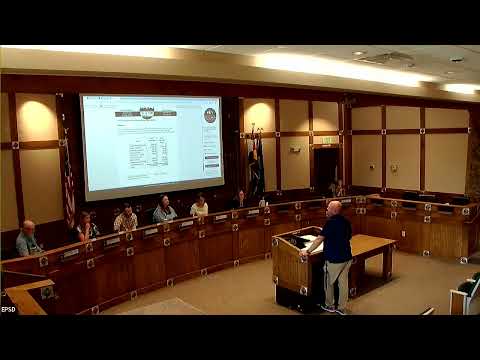
Estes Park district previews $26.2M budget and announces $5,000 retention incentive for staff
Summary
The Estes Park School District R-3 board approved its consent agenda on June 22, including the preliminary 2026–27 budget that sets total spending across funds at $26.2 million and authorizes capital transfers. Superintendent Ruby Bod announced a $5,000 retention incentive for every staff member funded from year-end availability (~$750,000).
The Estes Park School District R-3 board on June 22 approved its consent agenda, which included the district’s preliminary 2026–27 budget and related spending authorizations.
Brian, a district staff member who presented the budget, told the board the general fund — the district’s main operating fund — is supported by a 3.5 million mill‑levy override and that approximately 70% of the general fund is budgeted for salaries and benefits. He said the preliminary operating budget for the general fund totals about $19.8 million and that total expenditures across all funds are projected at $26.2 million.
Brian described several year‑to‑year shifts: an increase in defined‑benefit contributions (noted in the packet), a roughly $25,000 rise in food‑service costs driven by higher utilization and wages, and the planned transfer of approximately $1.5 million into capital reserves (fund 43) for projects including vehicle purchases, elementary carpeting and track resurfacing. He said some grant revenues will decline next year and that the district will absorb reductions in certain federal grant‑funded staff by using general fund dollars.
Superintendent Ruby Bod said the district’s year‑end position produced roughly $750,000 in available one‑time funds. “That means a retention incentive of $5,000 for every staff member,” she said, announcing the one‑time payment to employees.
The board approved the consent agenda — which included the preliminary budget, the no‑interest loan resolution and other routine items — by a unanimous roll‑call vote. The meeting packet and discussion noted that midyear audit results could change available fund balance and that the district may revisit allocations during the midyear review.
The presenter also reviewed cash‑flow mechanics: because the district receives most revenue locally and collects property taxes later in the cycle, the district expects to start short‑term borrowing in November and to repay after property‑tax collections in March. The board approved a resolution authorizing up to $6 million in borrowing capacity as a precautionary ceiling, while the staff projection showed a likely borrowing need of roughly $3 million under current assumptions.
The district plans to reopen all kitchens next school year (including the middle‑school kitchen) and to add one food‑service FTE. Staff told the board Title I carryover is expected to be zero and that the district will continue tutoring and project‑based supports using a mix of building budgets, general fund dollars and partner funding from United Way.
The board’s vote on the consent agenda carried 5–0. Next procedural steps: the district will finalize its budget work through the audit and midyear review and staff said they will notify employees about the retention incentive later in the week.