Get Full Government Meeting Transcripts, Videos, & Alerts Forever!
Get email alerts on the Solid Waste topic
No spam. Unsubscribe anytime.
Committee advances solid‑waste ordinance; proposal would remove five‑ and six‑unit buildings from municipal collection
Summary
The committee voted to pass a proposed amendment through first reading that would change the municipal solid‑waste collection threshold from up to six dwelling units to up to four per assessor parcel, a move the administration estimates could reduce disposal by roughly 8,000 tons annually and lower disposal costs by about $1.3 million.
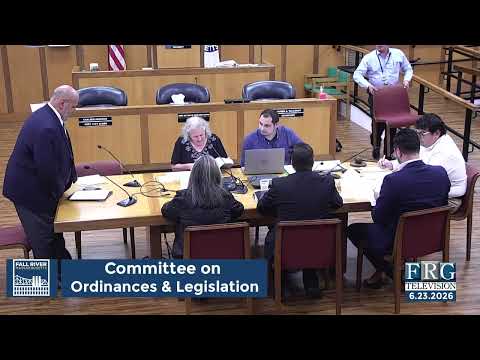
The Fall River City ordinances committee on June 23 moved a proposed amendment to Chapter 62‑C through first reading that would exclude buildings of five and six dwelling units from municipal solid‑waste collection by redefining the city’s threshold to four units per assessor parcel.
Special counsel Matt Thomas presented the amendment and a set of estimates intended to show the ordinance’s potential fiscal and operational effect. Using national per‑person waste averages and city property counts, Thomas said the change could reduce municipal solid‑waste disposal by about 8,000 tons and recycling by roughly 3,800 tons, representing about a 26% reduction of current disposal tonnage in the city’s estimate.
Thomas described implementation details: the contract under negotiation includes a transition provision to continue city collection for six‑unit properties for 30 days after ordinance amendment to allow notification and time for affected property owners to secure private service. He also noted enforcement challenges tied to contamination and proposed a three‑strike rule (three violations in 12 months could result in loss of municipal service) to address noncompliance at some multi‑family properties.
Council debate focused on equity and practical effects. Council Per opposed the change, calling it unfair to owners and tenants who currently receive city collection. Other members said many five‑ and six‑unit properties are absentee‑owned and present enforcement challenges; several councilors emphasized the city’s budget pressures and the potential $1.3 million annual disposal savings if contamination rates and disposal volumes follow the administration’s estimates.
After questions about assessor‑parcel boundaries and whether certain clustered buildings should be treated together, the committee voted to recommend passage through first reading (roll call recorded four yes, one no). Thomas and administration staff said they would provide follow‑up details as implementation progresses.