Get Full Government Meeting Transcripts, Videos, & Alerts Forever!
Get email alerts on the Agency Process Referral topic
No spam. Unsubscribe anytime.
Michigan Gaming Control Board tells committee it investigates tips and refers suspected illegal machines to the attorney general
Summary
The board's executive director said the agency lacks authority to remove machines from bars or restaurants and that suspected illegal devices reported to the board are investigated and referred to the Michigan Attorney General's Office; staff cited statutory language that the board uses to interpret its investigative role.
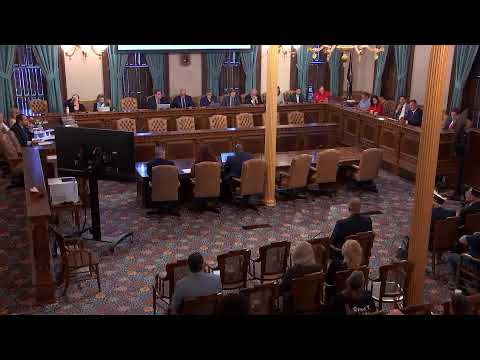
Henry Williams, executive director of the Michigan Gaming Control Board, told a House oversight committee that the board investigates reported concerns about redemption-style devices but does not itself remove machines from bars or restaurants; instead, the board compiles investigative information and refers potential criminal matters to the Michigan Attorney General's Office.
"The Michigan control board does not have the legal authority to remove gaming machines from a bar or restaurant," Williams said. "When a citizen reports a suspected illegal machine to us... we review it. And if it appears to violate the law, we refer to the Michigan Attorney General's Office."
A committee staff member then read statutory language the board relies on, citing the Michigan Gaming Control and Revenue Act's broad definitions of gambling operation and gambling game and noting that "a machine that takes payment to play, displays computer generated outcomes, and dispenses a stored value card redeemable for goods or services fits squarely within the kind of device this definition was written to capture."
Committee members pressed the board on whether its investigators who visit establishments are qualified to determine whether a particular device is a lawful redemption (skill) game. The chair noted that earlier prosecutions in Saginaw had mixed outcomes and said one case had been dismissed for insufficient probable cause. Williams said the board's practice is to investigate tips, gather evidence, and hand cases to the attorney general, which is the law-enforcement authority that can execute warrants and remove machines.
Throughout questioning, members sought a clear statutory dividing line between lawful redemption devices and illegal gambling equipment and asked about staffing priorities, including how many staff hours are devoted to investigating non-casino locations versus supervising licensed casinos. Williams said the board has a dedicated unit for criminal activity investigations but did not provide a percentage breakdown of staff time on the record.
The committee asked the Gaming Control Board to return for a fuller briefing so members can examine the board's procedures, the evidence it collects in investigations, and the executive director's recent letter to regulated parties that witnesses and the association criticized. The board agreed to return for additional testimony.
The hearing ended without formal votes on enforcement policy or pending legislation.