Get Full Government Meeting Transcripts, Videos, & Alerts Forever!
Get email alerts on the Wastewater And Industrial Development topic
No spam. Unsubscribe anytime.
Candidates clash over rendering fears and a planned wastewater plant in Franklin Springs
Summary
At a Franklin Springs forum, mayoral and council candidates debated a proposed municipal wastewater treatment plant and whether it could open the door to a poultry rendering facility; candidates differed on transparency, NDAs and whether industrial growth fits the city.
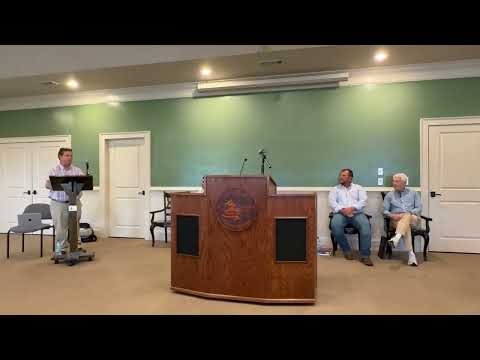
At a candidates forum hosted by the Franklin County Citizen Leader, mayoral and city council candidates spent much of the session disputing whether a planned wastewater treatment project could lead to a poultry rendering operation in Franklin Springs.
Josh Griffith, a mayoral candidate and firefighter who said he has firsthand experience with a nearby rendering plant, vowed to keep poultry rendering out of the city if elected. “I will work with all that I am to keep poultry rendering … out of Franklin Springs for as long as I’m in office,” Griffith said, presenting the rendering issue as his central campaign promise.
Incumbent Mayor Lee Moore pushed back with a direct denial. “Let me be clear, no rendering plans coming to Franklin,” Moore said, and described the city’s planned wastewater facility as intended for municipal sewage; he added that any industry would need its own pretreatment before discharging to municipal systems.
Bruce Scranton, another mayoral candidate, said documents tying industry names to city discussions had left him dissatisfied with the level of public information. Scranton told the forum he would not sign nondisclosure agreements (NDAs) that prevent citizens from learning about potential agreements. “If the NDA won’t let us represent you well, we’ll either negotiate it or pass on it,” he said.
The forum also put technical and financial details about the wastewater project under scrutiny. Participants discussed a planned 1.5 million-gallon-per-day municipal wastewater treatment plant; speakers at the forum noted that the city is exploring grants, bonds and other funding options and that a portion of projected capacity had been identified as committed but questioned how the remainder would be paid for. One candidate warned that the plant’s sizing and funding—candidates referred to engineering studies and what one called roughly a 5% committed resource figure—need clearer documentation before the city proceeds.
The 145.25-acre parcel owned by the city also emerged as a focal point. Candidates said roughly half of that site is already reserved for the treatment project, leaving about 70 acres potentially available for other development. Views diverged: some candidates argued for marketing remaining acreage for strategic commercial or light-industrial uses to expand the tax base; others urged preserving undeveloped land, creating a city center or using the site for parks and recreation after broader public input.
Candidates repeatedly raised transparency and public engagement as deciding factors. Multiple speakers urged the city to post plans, meeting recordings and project documents online and to change meeting practices so residents’ voices are heard before final decisions are made. Several candidates also called for a formal trade study to evaluate wastewater options and alternatives before committing to a large, long-term facility.
The forum closed with candidates urging voters to examine materials and vote on Nov. 4. No formal city action or vote was taken at the forum itself; the event served as a venue for candidates to stake positions ahead of the election.