Get Full Government Meeting Transcripts, Videos, & Alerts Forever!
Get email alerts on the Zoning topic
No spam. Unsubscribe anytime.
Council members defend 'missing middle' rezoning as resident warns of traffic bottlenecks
Summary
A longtime Doraville resident urged the council to halt rezoning that he said will worsen traffic; council members countered that the proposed T4 'missing middle' zoning encourages walkability and smaller-scale housing, not large apartment complexes.
A Doraville resident urged the city council on Oct. 8 to reconsider recent rezoning measures, saying new development is turning the city from a "buffer" into a traffic "blockage." Reges Shear, who said he has lived in Doraville for 46 years, described repeated congestion at Spaghetti Junction and along I‑285 and Peachtree Industrial, arguing that added apartments and new townhouses would funnel more vehicles into already-congested exits and streets.
"If the tip of that funnel gets blocked, then the worst part of that funnel is at the blockage and it blocks everything above it," Shear said during public comment, asking the council to factor traffic impacts into rezoning decisions.
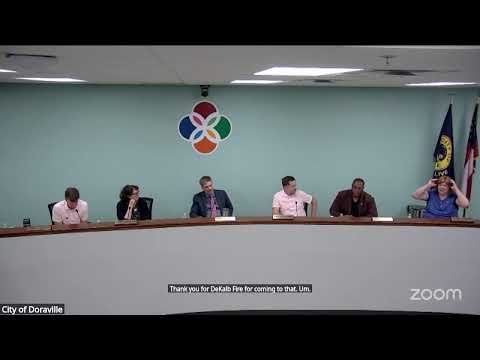
Council members responded directly to those concerns during their remarks. Council Member Taylor Ray said Doraville is "a beautiful, diverse, and wonderful city" with a rezoning proposal aimed at "missing middle" housing types (smaller multiunit or attached homes intended to bridge single‑family and large multifamily buildings). Ray said T4 zoning "does not incentivize large apartments, but instead missing middle housing that allows younger generations to fulfill the American dream of buying a home" and argued that walkable amenities can reduce vehicle miles traveled.
Council Member Henshaw reiterated that the proposed rezoning would not permit large apartment complexes within R1 neighborhoods and described the effort as intended to protect neighborhood character, add buffers along busy roads and increase walkability.
What happened next: speakers debated the framing—resident testimony emphasized existing truck traffic and chokepoints near interchanges, while council members defended the zoning as a planning tool for diverse housing types rather than high‑density apartment development. No formal zoning vote occurred at the Oct. 8 meeting; councilmembers said the item will continue to be discussed at future meetings.
Why it matters: Doraville lies near major regional corridors where added development can affect traffic patterns beyond the city's borders. The exchange highlights a key tension in local planning: balancing new housing options with residents' concerns about congestion and industrial truck traffic. The council signaled it will continue public conversation and planning steps before taking a formal legislative action.
Next steps: Council members said the rezoning discussion will continue at later meetings; no ordinance or formal vote on zoning changes was recorded on Oct. 8.