Get Full Government Meeting Transcripts, Videos, & Alerts Forever!
Get email alerts on the Deed Transfer Exemptions topic
No spam. Unsubscribe anytime.
Commission reviews deed-transfer tax exemptions, questions revenue redirection and county share
Summary
The Tax Expenditure Review Commission reviewed six deed-transfer tax exemptions estimated to cost $1.3 million annually, heard testimony clarifying that counties retain 3% of collections, and directed the Legislative Budget Office to proceed with evaluations after members pressed the Department of Revenue on redirected funds and housing-affordability implications.
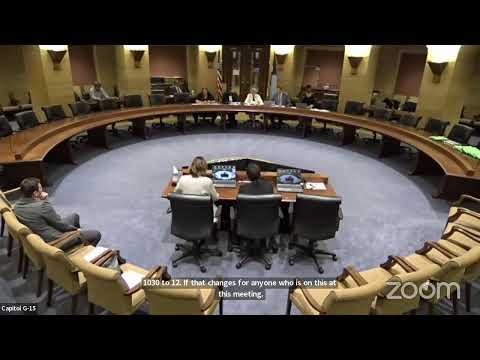
The Tax Expenditure Review Commission examined six deed-transfer tax exemptions on Aug. 16, 2024, hearing from Legislative Budget Office staff about how the exemptions define the deed-tax base and who is excluded from the tax.
LBO presenter Joel Enders told commissioners that Minnesota’s deed tax — charged when real property is transferred — equals one-third of 1% of the price paid and that the exempted transactions have a combined estimated fiscal impact of about $1.3 million annually. Enders said five exemptions (including cemetery lots, deeds by personal representatives and partitions between co-owners) function mainly to clarify which conveyances are subject to the tax; an exemption for permanent school-fund land exchanges aims to protect the fund’s fiduciary returns under the state constitution.
Department of Revenue tax-research staff clarified how collections are distributed. Eric Wette said, “the mortgage tax and the deed tax are two separate taxes,” and explained that current law sets aside 3% of deed and mortgage tax collections for counties while the remaining 97% goes to the general fund.
Members pressed LBO and Department staff about whether reported estimates are gross or net of legislative redirections. Representative Gomez asked whether the figures shown are the net amount reaching the general fund and whether prior bills that dedicated increments of mortgage or deed tax to housing programs affect the estimates; Enders and Wette said the published tax-expenditure estimates reflect foregone revenue before any subsequent legislative re‑directs or appropriations.
Senator Weber, drawing on decades in real estate, criticized the state’s share of deed-tax receipts: “the reason for raising the deed tax is only there’s only one reason for that and that is the state was trying to get its hands on more money,” he said, and urged commissioners to ask counties whether the 3% retention sufficiently covers local recording costs.
The commission agreed the deed and mortgage taxes should be considered together in future work because both track real-estate activity and can be volatile. Chair (meeting chair) asked LBO to include clarifying footnotes in its materials distinguishing exemptions that simply clarify statutory scope from exemptions that forgo revenue. The commission adopted LBO’s proposed purpose statements for items on the Aug. 16 agenda and directed the LBO to proceed with evaluations.