Get Full Government Meeting Transcripts, Videos, & Alerts Forever!
Get email alerts on the Code Enforcement topic
No spam. Unsubscribe anytime.
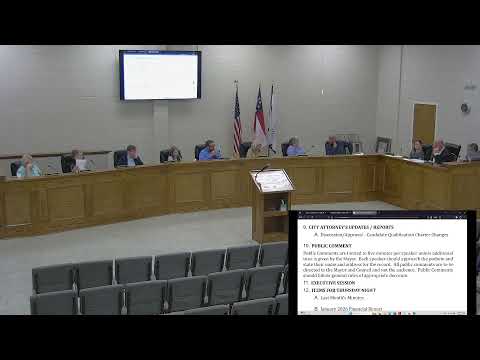
Loganville council steps up discussion of code enforcement and House Bill 295 after council raises tent-camping concerns
Summary
Council discussed hiring an additional code enforcement officer (a position has been requested in the budget) and asked staff and the city attorney to research implications of House Bill 295 and potential local ordinances regulating "urban camping." Officials emphasized distinguishing private-property trespass from public-space camping in any draft law.
Councilmembers voiced concern about people sleeping in tents on private and public property around Loganville and directed staff to research enforcement options and legal constraints.
Public safety committee chair Melanie Long said the city is seeing people camping in wooded lots and near commercial properties and urged the council to consider hiring a second code enforcement officer. Several council members said the request for additional code enforcement staff is already in the budget as a vacant position, and the council will consider it during the June budget process.
Melanie also raised House Bill 295, which she said "appears" to subject municipalities to liability if they do not enforce certain prohibitions on urban camping; the council asked the city attorney to research the bill and the legal interaction between zoning, trespass, and public-right-of-way regulation. City Attorney Paul cautioned that regulation of personal housing status is legally fraught and that public-rights-of-way and parks present different legal considerations than private parcels.
"When we're talking about private land and those are violations of your zoning ordinances... those regulations are probably already in place," the city attorney said, adding that enforcement capacity is the limiting factor. Council directed staff to return with recommendations distinguishing private-property enforcement steps (trespass/owner responsibility) from potential rules for public spaces and to assess legal risk if the state law evolves.