Get Full Government Meeting Transcripts, Videos, & Alerts Forever!
Get email alerts on the Annexation topic
No spam. Unsubscribe anytime.
Bristol council adopts annexation ordinance; county residents urge protections over rezoning fears
Summary
The Bristol Town Council approved a fiscal plan and adopted an amended annexation ordinance after a split vote; dozens of county residents testified against the move, citing concerns about automatic rezoning to industrial uses, water use, noise and property values.
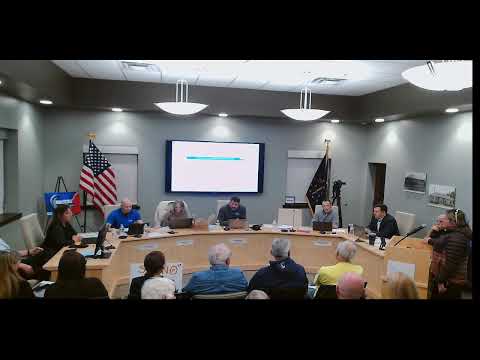
The Bristol Town Council on March 19 adopted a fiscal plan for a proposed voluntary annexation and — after amending its legal description — approved ordinance 3-19-2026-5 to annex the territory into the town.
Legal counsel Alex Wilman told the council the fiscal-plan study by municipal advisor Baker Tilly showed negligible additional cost for non-capital services and concluded Bristol Water Works can supply required capital services (water and sewer) within the three-year statutory timeline. The council adopted the fiscal-plan resolution 3-19-2026-6 by a unanimous vote.
Wilman recommended a narrow amendment to Exhibits A and B (the ordinance’s legal description and map) to reflect survey clarifications; the council approved the amendment unanimously and then took final action on the ordinance. The roll-call recorded Cathy Burke as the lone dissent on final adoption; other members voted to approve the ordinance.
The action prompted an extended public-comment period in which many residents who live outside town limits — most identifying themselves with County Road 14/19 addresses — urged the council to halt the annexation or to adopt strong protections. Speakers told the council they fear the annexed land could be rezoned to M1 or used for a data center or other industrial uses, and they said such changes would damage property values, increase noise and light pollution and strain local groundwater.
Residents offered specific requests: detailed site plans and traffic and noise studies before rezoning, legally enforceable buffers and tree screening, limits or conditions on industrial water use, and clear, direct notice to adjacent landowners. Several speakers said they had collected petitions and more than 800 signatures opposing the rezoning and argued the town has not adequately notified affected county residents.
Council members who supported annexation repeatedly said their vote reflected a desire for local control — they argued that if Bristol did not annex the land the city of Elkhart or Elkhart County might make different decisions and that the town could impose stricter site-development standards and buffering than a larger jurisdiction. “We have a lot more control over what is put out there eventually,” Councilmember Jeff Beachy said, noting the town can require tighter screening and landscaping standards.
Council members who opposed or hesitated said they were troubled by the community outcry and the potential impacts and emphasized the need to scrutinize subsequent rezoning and site-plan proposals carefully.
The council did not take a rezoning vote at the meeting; Wilman and council members said further steps — including a detailed site-development proposal and required county or zoning-board reviews — would follow before any change in land use occurs.
The meeting closed with the council noting next procedural steps: the annexation creates the town’s jurisdictional authority but any rezoning or development plan must go through the town’s rezoning and site-plan review process. The council also encouraged adjacent landowners to participate in upcoming hearings and offered to provide site-plan information as it becomes available.