Get Full Government Meeting Transcripts, Videos, & Alerts Forever!
Get email alerts on the Vermillion Village topic
No spam. Unsubscribe anytime.
Planning board backs amended Vermillion Village plan; applicant offers 7,500 sq ft of 'activated commercial'
Summary
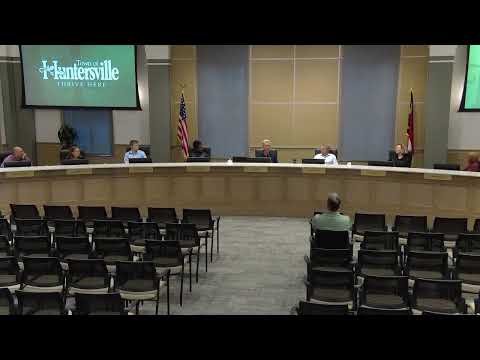
The Huntersville Planning Board recommended approval of an amendment to the Vermillion Village rezoning (R26-03) to reduce shopfront buildings along Huntersville-Concord Road from two stories to one and secure 7,500 sq ft of "activated commercial" (24% of applicant-controlled space); the board passed the recommendation with one abstention (Prince).
The Huntersville Planning Board recommended approval of an amendment to the Vermillion Village rezoning (R26-03) that reduces the height of shopfront Buildings B and C along Huntersville-Concord Road from two stories to one and secures a commitment of 7,500 square feet of "activated commercial" uses from the applicant-controlled parcels.
Planning staff summarized the request and explained staff’s preferred language to define "activated commercial" as retail establishments or restaurants that are intended to draw people into the downtown outside standard office hours. Staff flagged that the downtown plan (Huntersville 2040) envisions 3–4 story downtown buildings, so the applicant’s proposal to reduce certain shopfronts to one story would differ from that guidance but noted the applicant increased activated commercial from 5,000 to 7,500 square feet since the public hearing.
Bailey Patrick, a development partner at MPV Properties, told the board that second-floor retail is not leasing well in the current market and that the new plan improves parking ratios and pedestrian patio spaces. Patrick said market brokers and prior local projects informed the decision and that MPV aims to attract restaurants or other activated uses; he described the 7,500-square-foot commitment as the applicant’s practical approach to meeting an activated-commercial requirement given the parcels they control.
Board members split on the tradeoffs. Several members said the reduced heights and improved parking make the site more marketable and more likely to be completed, while others warned that approving one-story shopfronts could weaken the downtown 2040 plan’s objective of encouraging taller, mixed-use storefronts. One member raised a legal/precedent concern: allowing this deviation without rigorous justification might make it harder to hold other developers to original commitments in later cases.
A motion to recommend approval with staff conditions — including the 7,500-square-foot activated commercial commitment (24% of applicant-controlled commercial) — passed; a board member (Prince) recorded an abstention. The transcript does not record an explicit numerical vote tally for the Vermillion motion in the meeting record provided; minutes should be consulted for the official vote count.
Key details: staff recommended the activated commercial requirement be defined as retail/restaurant uses; the applicant proposed 7,500 sq ft (24% of its control) vs. staff’s 25% preference; staff will track tenant fit and approvals during permitting to ensure compliance.