Get Full Government Meeting Transcripts, Videos, & Alerts Forever!
Get email alerts on the Facility Finance Forbearance topic
No spam. Unsubscribe anytime.
San Luis board approves amendment extending bond forbearance and permitting receiver sale process
Summary
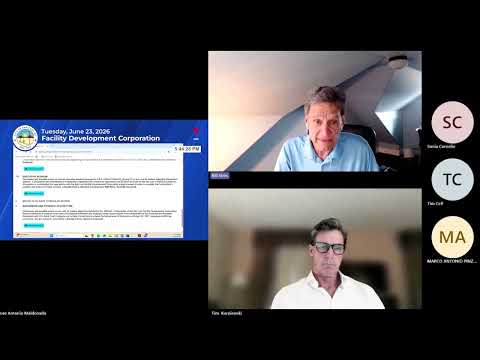
The San Luis Facility Development Corporation board on Jan. 28 approved a first amendment to extend bond forbearance to April 2027, formalizing steps to allow appointment of a receiver to market and sell the San Luis Regional Detention and Support Center while the operator remains on site under limited economic concessions.
The San Luis Facility Development Corporation Board of Directors on Jan. 28 voted to approve a first amendment to its forbearance agreement with U.S. Bank Trust Company and Lasal Corrections, extending temporary bond forbearance through April 2027 and authorizing steps that would allow a receiver to be appointed to market and sell the San Luis Regional Detention and Support Center.
Board legal participant Bill Sims told directors that the trustee had negotiated concessions to improve the economics for the operator and had documented a legal path to a sale. "The trustee came up with this idea ... Arizona Revised Statutes 33:2615, which expressly says that a receiver that's appointed may sell property free and clear of all liens," Sims said, describing a mechanism to permit a sale that would address bondholder recovery while keeping the facility operating in the near term.
Tim, who identified himself as the project's CFO and CPA and described long involvement with the facility's operation, said the current financing made continued operation unaffordable under the existing debt service. "We were already $4 million in the whole," he said, adding that the operator would not renew its five‑year management option without changes. Tim said the operator agreed to stay through a marketing period if direct operating expenses were paid and it received a 6 percent management fee, and that the trustee set a target date (Jan. 31, 2027, as described in the meeting) to work toward a sale or other resolution.
The board convened an executive session to receive legal advice and to consider the mechanics of authorizing a receiver and amending the forbearance agreement. After returning to open session, President Jenny Torres moved to approve the amendment described as resolution 20262; the motion was seconded and passed by voice vote. The board recorded that three members answered in the affirmative and announced "motion carries." The motion text in the meeting described the item as approving a "first amendment to the amended and restated agreement" with U.S. Bank Trust Company and Lasal Corrections to extend forbearance until April 2027.
Meeting participants discussed the tradeoffs the trustee sought to balance: preserving near‑term operations to preserve sale value and protect employees versus getting bondholder recovery. Bill Sims said the trustee had negotiated priority payments and other mechanisms, including increasing the net‑proceeds floor in the trustee's proposal from about $750,000 to $1.5 million, and providing a structure to prioritize certain accounts receivable. Tim said any sale would be solicited and the highest bid favored; he estimated outstanding secured debt at about $26 million and said any bid would likely be substantially discounted to that amount.
The board did not publicly disclose the full draft amendment text in open session; directors said they had discussed the amendment with counsel during executive session and then voted in public. The vote recorded in open session was the formal approval of the resolution described in the meeting; the board did not record individual roll‑call votes in the public transcript beyond the announced affirmative responses.
Next steps described during the meeting include implementing the approved amendment, continuing operations under the forbearance terms while the trustee outfits a marketing process for the facility and, if appointed, a receiver would be authorized to sell property under the cited Arizona statute. The board did not set a public timetable for formal sale notices beyond the internal date discussed during the operator's remarks.
The board’s action formalizes a path toward a marketed sale while extending short‑term protections intended to keep the facility open during that process.