Get Full Government Meeting Transcripts, Videos, & Alerts Forever!
Get email alerts on the Public Safety Radio Systems topic
No spam. Unsubscribe anytime.
Sawyer County committee weighs lease vs. build for countywide radio system
Summary
Committee members heard detailed staff analysis of radio-system upgrade options — leasing space on existing towers, building a county network (estimated $2.5 million), or partnering with an external broadband build — and directed staff to gather lease quotes, refine cost estimates, and bring financing documents to the Finance & Administration committee.
Members of the Sawyer County Public Safety committee spent the bulk of the meeting evaluating options to upgrade the county’s public-safety radio system, focusing on whether to lease space on existing towers, build county-owned towers, or partner with an outside broadband build.
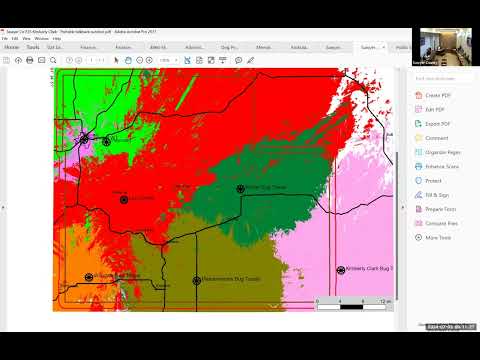
Andy, the staff lead on the project, told the committee that Gencom and broadcast partner WJB have indicated there may be room to colocate county equipment on existing towers pending structural and permitting reviews. He said staff had also identified several existing, county-zoned tower sites (including a 400-foot tower near Wooddale and a site by Oxo) and discussed using the Connor Lake DNR tower as a southeast coverage option. "We have options — if we want to lease there's some options there and still building is an option," Andy said.
The committee heard cost trade-offs from staff and consultant Gary. Building a county-owned network would be capital-intensive: staff gave an engineering-level estimate of about $2.5 million to build and operate a full network; that debt service would be treated outside the levy limit. Leasing tower space would reduce upfront capital needs but create recurring operating costs. Staff provided lease-rate ranges of approximately $1,500–$2,200 per month per tower (roughly $24,000 per tower annually), which could approach $100,000 a year if multiple leased sites are required. "If we build we own and operate towers; if we lease we lower construction costs but we'll be paying leases every year," Gary said.
Officials also discussed a possible arrangement with a third-party broadband build (referred to in the discussion as 'bug tussle') and Price County, which could provide towers and fiber for the southeast portion of the county. Staff cautioned that partnering could reduce the county’s capital outlay but carry borrowing or credit risk if the partner's financing failed; committee members asked staff to continue due diligence on the partner’s business case.
On timing and permitting, Gary said a typical new-tower project runs closer to 9–12 months from start to operational coverage once zoning, state requirements and construction are completed; using existing sites that already have buildings can accelerate deployment. Staff also noted technical architecture choices (fiber vs. microwave backbone, simulcast design) and said fiber at tower locations is desirable but may not be available at all candidate sites.
Committee members raised public concerns (health/emissions and town-level input), and some supervisors asked that potential tower builders brief township boards. Gary suggested adding zoning conditions that require providers to guarantee public-safety access at reduced or no cost as a way to secure coverage without eroding county resources.
Next steps: staff will solicit lease-rate quotes for candidate sites, prepare a build-vs-lease cost-benefit analysis, continue due diligence on the external partner option, and forward a notice of intent and an authorizing resolution to the Finance & Administration committee so the partnership option can remain on the table without binding the county. No final decision was made at the meeting.