Get Full Government Meeting Transcripts, Videos, & Alerts Forever!
Get email alerts on the Workers Compensation topic
No spam. Unsubscribe anytime.
City staff warn workers’ comp rating is more than double peers, urge new safety programs and hires
Summary
City safety staff told the Audit & Finance Committee that the city’s experience modification rating is 2.02 — more than double the municipal benchmark — and recommended stricter injury reporting, loss-control audits, mandatory training and a new safety specialist to reduce claims and stabilize funds.
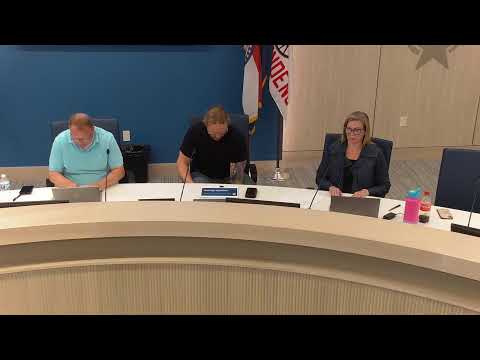
Nicole Thompson, the city’s safety and compliance program administrator, told the Audit & Finance Committee on June 24 that the City of Independence’s experience modification rating (EMR) is 2.02, meaning the city has roughly double the workers’ compensation claims experience of comparable municipalities.
"The City of Independence does have an experience modification rating of 2.02," Thompson said, and explained the EMR is calculated as a three‑year rolling benchmark that factors both the number and severity of claims. She showed staff and broker data indicating rising total claim costs and an increasing cost per claim, trends she said are driven in part by the lack of formalized safety programs and uneven injury‑reporting practices across departments.
Thompson said benchmark reports show a lag in employee injury reporting and a higher percentage of claims in which employees retain counsel to obtain settlements. "We are seeing a greater percentage of our workers' compensation claims where an employee retains counsel," she said, which staff view as an indicator of challenges in navigating claims and medical-management processes.
To address the problems, staff recommended several measures: adopt industry standard safety and health program practices (including more consistent OSHA‑aligned recordkeeping), increase loss‑control audits, make key trainings mandatory citywide, better use the third‑party administrator portal for timely claims data, and create clearer governance and vendor coordination so staff fully utilize broker and third‑party services.
Committee members pressed staff on specifics: whether training is currently mandatory (staff said not citywide), which departments underreport (Thompson said the problem appears citywide and varies by supervisor and local culture), and what interim metrics could show progress (staff recommended tracking OSHA‑recordable case rate, days-away/restriction/transfer days, and faster claim‑closure times).
The city is hiring a safety and training specialist expected to start next month to coordinate loss control, accident investigation processes and broader safety programming. Thompson said more frequent claims‑review meetings — quarterly rather than annually — and better use of existing vendor services should help shorten claim durations and lower costs.
The committee did not take a formal action at the meeting; staff said they would return with program proposals, potential budget requests and proposed policy changes for committee and council consideration.