Get Full Government Meeting Transcripts, Videos, & Alerts Forever!
Get email alerts on the Procurement topic
No spam. Unsubscribe anytime.
Council accepts lowest bidder for Pearl Street reconstruction; members ask for clearer local-preference policy
Summary
After a prior 4–4 tie, the council accepted the lowest bidder for Pearl Street reconstruction. Staff said the low bidder will use a local subcontractor; council members pressed for a clearer, tiered purchasing policy to guide local-preference decisions in future procurements.
The Coldwater City Council voted to award the Pearl Street reconstruction contract to the lowest bidder after the item previously ended in a 4–4 tie. Amanda told the council that the lowest bidder indicated it would subcontract portions of the work to a local paving company.
Staff reviewed the city’s purchasing policy and told the council it is vague on how to apply a local-bidder preference. Amanda recommended awarding to the lowest bidder and returning with a refined policy. “My recommendation [was] to follow and simply go with the lowest bidder in question. But to go back and review that purchasing policy and set forth a more structured way to analyze this in the future,” Amanda said.
Councilmembers debated balancing a preference for local contractors with fiduciary responsibility to minimize taxpayer cost. One councilmember said a tiered preference that narrows by dollar amount could preserve value while giving local firms an opportunity. Another suggested requiring the next-local bidder to match the lowest bid within a set percentage.
Contractor Brad Parish (speaking during public comment) described unit-price bidding mechanics and cautioned that final project costs vary with actual measured quantities in the field; he urged the council to consider those mechanics when evaluating bids and local impact.
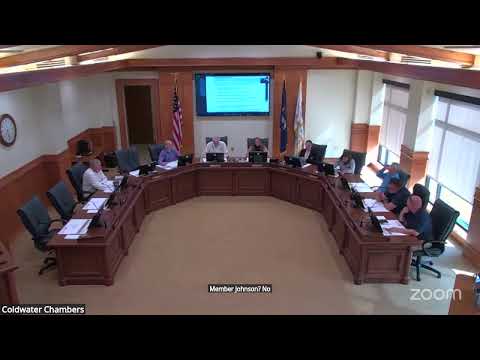
The council voted by roll call to accept the lowest bidder for Pearl Street and instructed staff to return with clearer purchasing-policy language and potential tiered local-preference options for future procurements.