Get Full Government Meeting Transcripts, Videos, & Alerts Forever!
Get email alerts on the State Legislation topic
No spam. Unsubscribe anytime.
PGCPS committee reviews 2026 Maryland climate, pedestrian and bus bills; several stalled in Senate
Summary
Committee member Timothy Meyer briefed the Climate Change Action Plan ad hoc committee on 10 climate, pedestrian‑safety and school‑transportation bills from the 2026 Maryland General Assembly, noting a mix of one major passage, several hearings without votes, and opportunities to refile or support measures next year.
Timothy Meyer, a committee member, reported to the Prince George’s County Board of Education Climate Change Action Plan ad hoc committee on May 6, 2026, that the 2026 Maryland legislative session produced a mix of outcomes for bills relevant to school climate and safety.
Meyer opened the update by identifying 10 bills he tracked as climate, transportation or pedestrian‑safety related and flagged HB 79, the Climate Solutions Affordability Act of 2026, as a concern. “The key phrase in the description of it is that climate solutions should be carried out to the extent economically practical, which is really coded language for finding a fiscal reason to not… implement climate action,” Meyer said, and recommended the district consider an opposed stance if the bill is reintroduced.
He highlighted one clear passage for the session: HB 429/SB 599, a farm‑organics and food‑waste diversion grant program that he called “one of the big climate wins,” noting the House vote roughly 126–7 and strong Senate support. Meyer said the bill has been sent to the governor and signed into law.
Several bills with direct implications for PGCPS did not advance beyond committee hearings. HB 614/SB 381, which would require monthly school‑building energy‑use reporting to the Interagency Commission on School Construction, had hearings in both chambers but no committee votes. Meyer said bills that passed one chamber or only reached hearings reflected a broader pattern of insufficient floor time in the Senate.
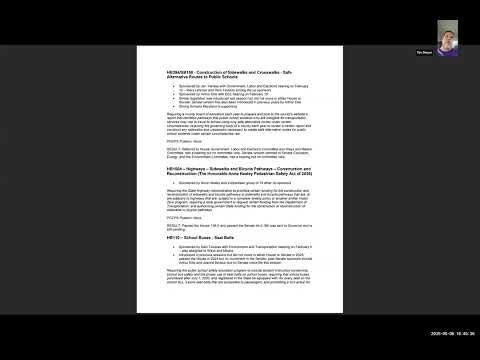
Pedestrian‑safety measures had mixed results. Meyer described HB 486/SB 526 (establishing Ruby Bridges Walk to School Day) as passing the House but again stalling in the Senate, and said he will work to refile with stronger Senate sponsorship. He also highlighted HB 1504 (the Hon. Ann Healey Pedestrian Safety Act of 2026) as a unanimous bipartisan passage that had been sent to the governor.
On school transportation, Meyer noted HB 110 (school bus seatbelt requirements) and HB 1019 (a grant program for propane‑powered school bus transition) received committee attention but no final action; he said PGCPS had expressed support for measures that would help modernize the bus fleet but that climate‑oriented advocates favored electric options over propane.
Meyer closed by flagging a major missed opportunity on capital investment: HB 1329/SB 930, a broadly scoped public‑school construction funding bill with a cited $550 million target, had hearings but no committee vote. He argued to the committee that school modernization is one of the district’s most effective levers for climate resilience.
Next steps: committee members asked questions about other omnibus energy bills and possible funding streams; Meyer and board staff suggested tracking reintroductions and aligning district advocacy around bills that would fund electrification, energy reporting and safe routes to school.
The committee did not take a formal public‑policy vote during the meeting on any of the bills but identified several items (HB 79 and HB 1329 among them) to follow in next year’s session.