Get Full Government Meeting Transcripts, Videos, & Alerts Forever!
Get email alerts on the Fee Schedule Vending topic
No spam. Unsubscribe anytime.
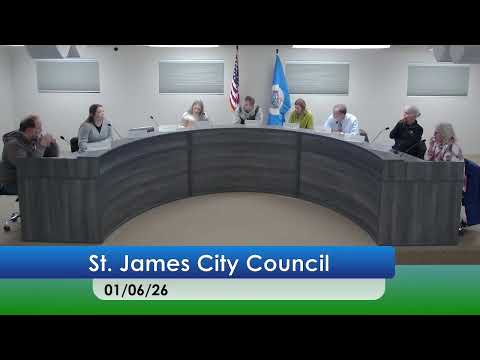
St. James council delays 2026 fee-schedule change after heated debate over food‑truck permits
Summary
After extended debate, the St. James City Council on Jan. 6 failed to approve the 2026 fee schedule as written and asked staff to research food‑truck vending fees and code‑enforcement fines for consideration at the next meeting.
The St. James City Council on Jan. 6 declined to approve the 2026 fee schedule as presented and directed staff to research vending (mobile food vendor) fees and code‑enforcement citation amounts and return with recommendations at the council’s Jan. 20 meeting.
Council member Sue argued the current annual mobile‑vendor license — $100 per vendor per year — allows food trucks to park in high‑visibility spots and undercut brick‑and‑mortar restaurants, saying, “They’re taking up too much parking space” and that local clubs and restaurants “give the city” revenue that should be protected. Other council members pushed back, noting that nearby towns charge $100 and that food trucks can bring customers and even grow into fixed-location businesses — one member pointed to examples of taco trucks that expanded into Main Street restaurants.
Staff explained the city’s event permit process exempts vendors at organized events: the event host pays the event application and that application covers all food vendors for that event, so individual vendors do not each need a city annual license for those events. Staff also clarified that the $100 vendor license is an annual fee. Council members discussed intermediate increases (suggested figures ranged from $150 up to $300 for special cases) but expressed concern about driving vendors away and wanted comparable‑community data before changing policy.
The fee schedule presented included other changes staff highlighted: an increase in refundable shelter damage deposits from $100 to $150 (to match the community building deposit); budgeted campground fee increases; a $25 increase for certain planning/variance items and a $1 per‑notice increase; assignment of a $100 citation for park regulation violations where none existed in 2025; and several police fee updates to align with peer cities. Staff said the planning commission and line edits were mostly housekeeping and one police item had been flagged to align with other municipalities.
When asked about code enforcement, council members suggested raising the administrative citation (currently $75) to $100–150 but noted practical limits on collection and enforcement. Staff said they would research comparable towns’ fees and return with options for both vending and code‑enforcement fees.
The council attempted a vote on approving the whole fee schedule "exactly as written" (including the existing $100 vending license); that motion failed. Rather than adopt the full schedule, the council instructed staff to gather comparative data and bring a proposal back at the Jan. 20 meeting so that the council can consider a targeted change to the vending fee or to table that single line while approving other items.
What comes next: staff will report back with a benchmarking memo on vending and enforcement fees for council consideration at the Jan. 20 meeting.