Get Full Government Meeting Transcripts, Videos, & Alerts Forever!
Get email alerts on the Land Use topic
No spam. Unsubscribe anytime.
Glendale adopts emergency ordinance to delay SB 79 effects for some historic and high-fire-risk sites
Summary
Council adopted an urgency ordinance temporarily delaying implementation of SB 79 for certain properties located in very high fire hazard severity zones and locally designated historic resources (estimated about 330 properties), after public testimony for and against.
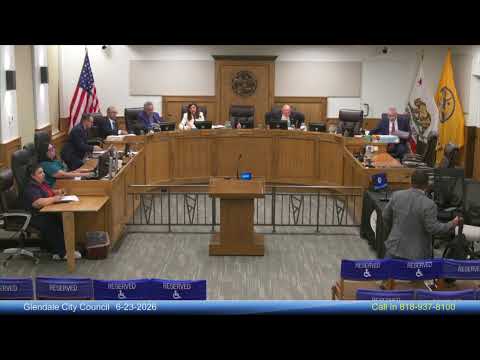
The Glendale City Council adopted an emergency ordinance on June 23 that temporarily delays application of the state’s SB 79 (the Abundant and Affordable Homes Near Transit Act) for certain properties located within very high fire hazard severity zones and for locally designated historic resources.
Councilmember GhArpetian introduced the urgency ordinance and framed it as a limited, targeted measure intended to preserve sites at elevated wildfire risk or recognized local historic character. Public commenters who supported the item argued the measure provides time for the city to craft local transit-oriented development strategies or ‘TOD alternatives’ similar to steps other cities have taken; others warned the ordinance only covered a small subset (about 330 properties) compared with thousands affected by SB 79 statewide.
After hearing public testimony, the council moved and seconded the ordinance and approved it by roll call. Staff noted the ordinance does not permanently exempt properties from SB 79 but delays the immediate effect for the designated categories while the city evaluates implementation options.
Supporters said the delay allows more time for local planning to mitigate wildfire risks and protect locally important resources; opponents in public comment urged a broader, proactive transit-oriented strategy. The council’s action is procedural and temporary; staff will report further steps for local implementation and any required follow-up with state authorities.