Get Full Government Meeting Transcripts, Videos, & Alerts Forever!
Get email alerts on the School Funding topic
No spam. Unsubscribe anytime.
Oak Hill board approves placing eight-year operating referendum on November ballot
Summary
Oak Hill United School Corp. trustees voted at a special meeting to place an eight-year operating referendum question on the November ballot to offset projected revenue losses from Indiana’s SEA 1; the district cited declining taxable value, rising costs and a projected first-year revenue of about $717,000 under a proposed 14.79‑cent start rate.
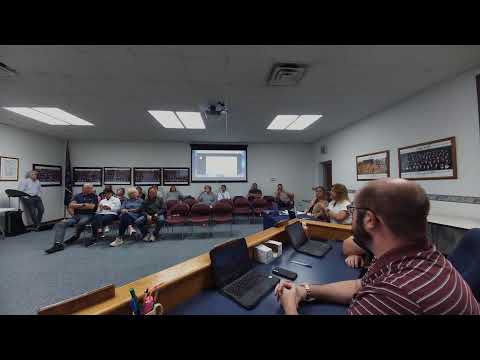
The Oak Hill United School Corp. board voted at a special meeting to place an eight‑year operating referendum on the November ballot, asking voters whether to authorize a capped property‑tax rate to sustain school operations starting in 2027.
The presentation that preceded the board action emphasized Oak Hill’s academic strengths and community programs while outlining a projected funding shortfall driven by changes in state law (referred to in the meeting as SEA 1), rising costs and a shrinking tax base. “Oak Hill has always been more than a school district. We are a collection of communities, families, educators, students, and neighbors,” the presenter said, framing the referendum as a measure to protect programs and staffing.
Why it matters: presenters and the district’s financial model say the combination of SEA 1 deductions and slower state funding growth has reduced Oak Hill’s taxable value and created an operating gap. The presenter illustrated the gap by showing Oak Hill receives roughly $7,480 per student from the state, ranks below the state average in per‑student funding, and faces an inflation-adjusted shortfall the district estimated at about $1,460 per student (roughly $2.16 million at current enrollment levels).
What the referendum would do: the question approved for the ballot would authorize an eight‑year operating levy (the district used a maximum rate cap of 0.332 in its resolution). The board discussed a scenario that would begin at 14.79 cents in 2027 and could move to 24.61 cents in 2028 (final annual rate decisions would remain under board control each year, up to the capped maximum). Based on the district’s modeling, the 14.79‑cent scenario was estimated to generate about $717,000 in the first year.
Household example and limits: the presenter walked through homeowner examples for a $150,000 median home (the district’s median value reported as $147,700, rounded to $150,000 for the ballot wording). Under the district’s illustrative numbers, the 14.79‑cent proposal would increase the typical median homeowner’s annual bill by roughly $86 in the example shown; the resolution also included a calculation showing a maximum‑rate scenario would increase the sample median home’s bill by a larger amount (the district noted a $198 annual increase at the stated maximum rate in its informational slides).
What it would pay for: the district said referendum proceeds would be targeted to maintain essential health and safety initiatives (school resource officers and nurses), support teacher and staff retention, preserve class sizes and student transportation, and fund academic and support programs. The board must publish a spending plan tied to the ballot question and the state will audit allocations.
District finances and cuts to date: presenters said Oak Hill’s total annual budget is about $13 million; roughly $10.6 million of that goes to instructional salaries and benefits, while the operations fund totals about $4.5 million (with about $2.4 million in operations staff salary and benefits). Transportation costs were cited at approximately $1.275 million and property/insurance costs (property and liability) at about $350,000. The district also described personnel reductions taken the last two years (nine positions previously and an 11‑position reduction more recently), producing combined staffing savings in the low six figures.
Public reaction and Q&A: public commenters and several residents asked detailed questions about assessments, farmland exemptions and the longer‑term consequences of SEA 1. Farmer and resident Stephen Richie said during public comment, “farm ground doesn't send kids to school,” expressing concern about how farmland deductions factor into tax burdens. Presenters and others responded that SEA 1 phases in large deductions and assessment changes that reduce the local tax base and shift the fiscal burden away from those deductions unless voters choose local referendums.
Next steps: the board approved the tax‑levy resolution to place the referendum question on the ballot and will submit the question and required documentation to the Department of Local Government Finance (DLGF) for review before ballots are finalized. Voters will decide the measure in the general election; if approved, the district’s board will set annual levy rates within the ballot’s capped parameters and publish the spending plan tied to the referendum funds.
Board action: the transcript records a motion and second to approve the referendum tax levy resolution and indicates the board voted in favor; the meeting adjourned after the vote. The transcript does not include a roll‑call listing of individual member votes or a numeric tally in the provided segments.
—
Sources: presentation and public comment at the Oak Hill United School Corp. special meeting; district slides and modeling referenced Policy Analytics for parcel‑by‑parcel analysis described at the meeting.