Get Full Government Meeting Transcripts, Videos, & Alerts Forever!
Get email alerts on the Nato topic
No spam. Unsubscribe anytime.
NATO chief praises U.S. steps on Iran, points to surge in allied defense spending ahead of Ankara summit
Summary
NATO Secretary General Mark Rutte told reporters the recent U.S.-led action degraded an Iranian nuclear capability and credited increased European and Canadian defense spending—about $1.2 trillion since 2017—while urging faster industrial production before the Ankara summit.
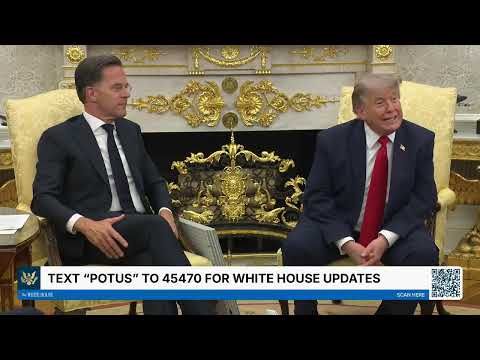
Mark Rutte, NATO's secretary general, told a White House briefing that recent action to degrade Iran’s nuclear capabilities underscored the security rationale for allied cooperation and reflected growing European investment in defense.
"This is about security, about safety," Rutte said, adding that allies had supported operations with logistics and air operations and that he had shown reporters a chart he called the "Trump trillion," which he said represents roughly $1.2 trillion in additional European and Canadian defense spending since 2017.
Rutte said the isolated effect of extra defense spending in 2025–26 amounted to nearly $140 billion and that allied defense spending increases would continue in 2026, bringing two-year increases to more than $250 billion. He also cited employment impacts, saying about 195,000 jobs are supported by European investment in the United States and that roughly $300 billion in orders for defense industrial output are already on order books.
The secretary general urged faster defense industrial production to replenish stockpiles after sustained supporting operations and described the Ankara NATO summit’s first day as likely to focus on industrial output and manufacturing—interceptors, missiles, tanks and artificial intelligence among the priorities.
In a question-and-answer session that followed, the President praised Rutte’s leadership but repeated criticisms of several European governments for not meeting agreed spending targets; Rutte responded that allied performance was a "mixed bag" with bilateral commitments, notably Germany’s, delivering significant increases.
Why it matters: Rutte’s public accounting ties allied military cooperation in the Iran episode to a broader shift in European defense budgets and frames the Ankara summit as a moment to convert increased spending into production capacity. That industrial focus matters for sustainment of allied operations and the U.S. defense industrial base.
Rutte’s remarks and the subsequent exchange with the President come as NATO prepares for the Ankara meeting, which Rutte said will include 42 countries and prioritize replenishing munitions and equipment. He called the allied increases "real jobs" and urged coordinated industrial scaling to meet demand.