Get Full Government Meeting Transcripts, Videos, & Alerts Forever!
Get email alerts on the Property Reappraisal topic
No spam. Unsubscribe anytime.
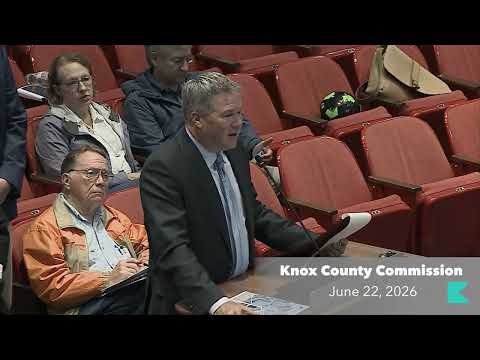
Knox County assessor outlines reappraisal process, says 2022 baseline drives large valuation changes
Summary
Property Assessor Phil Ballard told the commission that reappraisal equalization pushed values up from the 2022 baseline, leading to a projected revenue-neutral certified tax rate decrease and roughly 14,000 informal appeals handled. He urged public outreach and explained appeal pathways.
Property Assessor Phil Ballard briefed the Knox County Commission on the county’s 2025 reappraisal results and the appeals process.
Ballard said the county issued roughly 12,800–14,000 informal notices and appeals during the reappraisal cycle, with most appeals handled online rather than by phone. He credited the expanded online workflow and staffing with absorbing the workload and noted that commercial appeals remain active. Ballard explained that the purpose of a reappraisal is to align appraised values with market value; because the county’s last reappraisal baseline was 2022, increases through 2025 can look large when measured from that earlier year.
On tax effects, Ballard said the increase in appraised values is typically offset by a lower certified tax rate in a revenue-neutral reappraisal year. He illustrated how a homeowner whose market value rose substantially since 2022 may still see only modest changes in taxes after the certified tax rate adjustment, but stressed individual outcomes will vary by neighborhood and sales data.
Ballard outlined the appeals path for property owners: informal appeals with county appraisers, County Board of Equalization hearings (scheduled beginning June 28 for this cycle), then to the State Board of Equalization and — rarely — chancery court. He also addressed technical questions from commissioners about sales-ratio analyses, targeted adjustments for subdivisions with atypical sales, and the potential benefits of shortening reappraisal cycles to reduce large spikes.
Commissioners asked about utility- and personal-property assessments, whether big-box commercial properties pay a fair share under the sales-ratio rules, and approaches to tracking geographic variation in valuation changes. Ballard and staff agreed to provide further bell-curve and parcel-level analysis within a few weeks.
Quote: “The goal of reappraisal is to be fair, putting new values on homes close to market value,” Ballard said, urging continued outreach and clear notices for residents.