Get Full Government Meeting Transcripts, Videos, & Alerts Forever!
Get email alerts on the Land Use Data Centers topic
No spam. Unsubscribe anytime.
Knox County adopts one-year moratorium on new large-scale data centers, refers rules to planning commission
Summary
After hours of public comment and debate, the Knox County Commission on June 22 approved a one-year moratorium on permitting new large-scale data centers (threshold raised to 10 megawatts) and asked the planning commission to draft permanent regulations. Telecom providers supported carve-outs and staff recommended parallel review.
The Knox County Commission voted June 22 to temporarily bar new large-scale data centers while staff and planners develop formal siting rules.
The moratorium, adopted after nearly three hours of public comment and technical exchanges, will last one year or until the commission adopts new regulations, whichever comes first. Commissioners amended the language during debate to raise the capacity threshold from 5 megawatts to 10 megawatts and to expressly send the moratorium to the county planning commission for an expedited recommendation.
Why it mattered: Supporters said the pause gives the county time to draft zoning and infrastructure safeguards before any large facility is sited. Opponents warned the measure could be redundant or invite litigation unless it is carefully coordinated with planning and legal review.
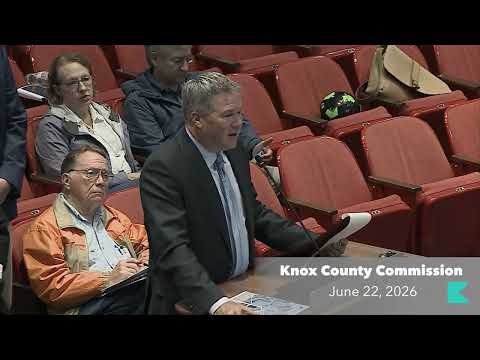
What happened at the meeting: Several residents urged caution. Ben Mullins, an attorney with experience in land-use litigation, recommended routing a moratorium through the planning commission to avoid court challenges; he told commissioners that courts have struck down moratoria treated as de facto zoning changes when planning-review steps were skipped. Justin Koefer, a former Air Force power-production specialist, told the commission county residents deserve a clear accounting of costs — from electricity and water use to infrastructure upgrades — before the county greenlights facilities that can consume large amounts of utilities.
Telecom carriers weighed in. Dustin Blythe of AT&T told the commission his company supports a carefully targeted moratorium but asked that routine telecommunications facilities that house network gear not be swept up by a broad definition. CJ Butcher of Comcast raised similar concerns about inadvertently capturing existing telecom facilities that perform essential broadband and emergency functions.
County staff and counsel advised a two-track approach: adopt a narrowly tailored moratorium that takes effect immediately and simultaneously ask the planning commission to recommend zoning and permitting language. Director of Law and staff explained the legal precedent — the county could defend a general moratorium under its police power, but routing a moratorium through the planning process helps avoid the risk described in past court decisions involving land-use moratoria.
Commission action and vote: After an amendment raising the megawatt threshold to 10 MW and adding the planning-commission referral, the moratorium passed with 10 votes in favor and one recusal. The commission instructed staff to ask the planning commission to return recommended regulations quickly so the moratorium can be replaced by a permanent, enforceable regulatory framework.
What’s next: The planning commission will review the moratorium and produce recommended rules; the commission will consider final zoning or regulatory changes when that review is complete. The moratorium does not affect existing data centers already operating at the time of adoption.
Quotable: “An ounce of prevention is worth a pound of cure,” Commissioner Hill said during debate, urging a pause so the county can set clear standards before developers begin to site projects.
The commission’s action does not ban broadband or small telecom equipment; the adopted text and staff guidance are aimed at larger facilities that materially change local utility needs and land-use patterns.