Get Full Government Meeting Transcripts, Videos, & Alerts Forever!
Get email alerts on the Water Infrastructure topic
No spam. Unsubscribe anytime.
Decatur council adopts waterworks revenue bond and opens hearing on rate changes to fund lead-line replacements
Summary
The Decatur Common Council adopted Ordinance 2026-11 to issue revenue bonds for waterworks improvements and opened a public hearing on proposed water-rate amendments tied to mandated lead service‑line replacements; the council scheduled a second hearing for June 16 and tabled the rate ordinance pending that session.
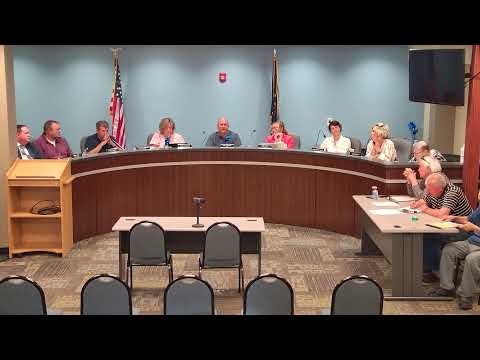
The Decatur Common Council on June 2 adopted Ordinance 2026-11 authorizing revenue bonds to finance waterworks improvements and opened a public hearing on proposed amendments to the city’s water-rate tables that would fund a multi-year program to replace lead service lines.
The council voted to adopt the bond ordinance by roll call. City staff and consultants said the work responds to a federal mandate on lead service lines and that the financing package available through state revolving funds includes roughly $5.5 million in grant aid, about $2.5 million in interest‑free loans and a 35‑year loan at roughly 2.98 percent. Jennifer Wilson of Crow, the firm that prepared the rate study, said, “The revenues that will be collected from this rate increase will be going directly towards that debt.”
Why it matters: Council members and staff said the project will replace aging mains and remove lead service lines, work they described as necessary maintenance that will extend the system’s life for decades. Council also noted that utility user fees—not general tax dollars—must pay for utility projects, citing state accounting rules.
Public comment at the hearing focused on timing, notice and property impacts. Resident Eric Gage asked, “If our yards are tore up, are they going to be re‑landscaped?” Commonwealth Engineers and city staff replied that new service lines will be bored where possible to minimize surface disruption, contractors are required to restore any damaged property, and the city will perform pre‑construction audio/video surveys of affected properties so restoration can be documented.
Timing and costs: Officials said work will not begin before July; the service‑line portion of the project is expected to continue through the end of 2027. Consultants explained lenders want rates confirmed so the city can begin debt service payments as soon as the loan closes; city staff said bond funding and loan proceeds are expected around June 25. Council members and residents heard estimates that the proposal represents about a 15 percent increase overall (the city estimated the average homeowner’s bill would rise by roughly $10 monthly and that the in‑town minimum bill will increase about $6), but final numbers will be set in the ordinance and rate tables.
Procedural next step: The council closed the public hearing and scheduled a second hearing on the water‑rate amendments for June 16; the rate ordinance was tabled pending that hearing. The council had already passed Ordinance 2026‑11 on its final reading to authorize bonding for the work.