Get Full Government Meeting Transcripts, Videos, & Alerts Forever!
Get email alerts on the Technical Assistance topic
No spam. Unsubscribe anytime.
State Water Board and partners launch technical-assistance pilot to help suppliers comply with new conservation rule
Summary
The State Water Resources Control Board and partners announced a technical-assistance pilot at a June webinar to help urban water suppliers with reporting, data validation and CI classification under the "Making conservation a California way of life" regulation; agencies can apply via an intake form by July 10.
The State Water Resources Control Board and a coalition of partners on June 2 announced a technical-assistance pilot to help urban water suppliers implement the "Making conservation a California way of life" regulation and complete required reporting.
"If it sounds like this is something your agency wants to be a part of...please fill out that intake form by July 10," Karina Era, a State Water Resources Control Board staffer, said near the close of the webinar.
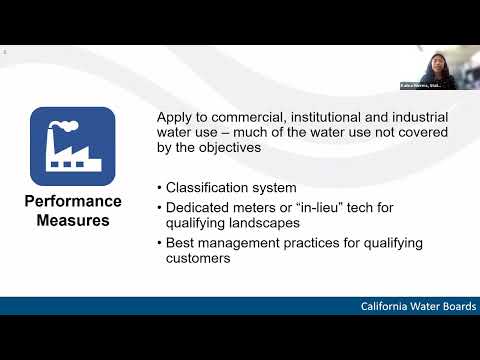
Why it matters: the regulation requires each urban retail supplier to calculate an individualized urban water use objective and to submit an annual report. Smaller suppliers and those with limited data capacity told regulators they face the greatest challenges meeting the complex reporting and CI (commercial, industrial, institutional) classification requirements.
Who is running the pilot and what it offers: the board is partnering with the California Data Collaborative, the California Water Efficiency Partnership (CalWEP), and private-sector consultants that will supply data-analysis, automation and classification services. Christopher Tull, chief data officer at the California Data Collaborative, said the pilot will offer a mix of education, data-formatting tools, validation checks and hands-on services such as CI customer classification and DIM/MUM analysis.
Participation, capacity and timeline: organizers said the pilot is currently unfunded and will admit a limited number of agencies based on the depth of need and available staff time. Agencies interested in hands-on support were asked to complete an intake form by July 10; earlier submissions will help shape who can be served and at what level of support.
What applicants can expect: CDC and partners will review the intake submissions, conduct a needs assessment that includes conversations with agency staff and prior reports, and propose an assistance plan tailored to each selected agency. CalWEP offered to extend access to its compliance resources to pilot participants who are not already CalWEP members.
Partners' roles: speakers from Deote Consulting and Black & Beach described services they could provide, including digitizing records, improving data pipelines and documenting repeatable processes so assistance can be scaled to other suppliers.
Next steps and resources: organizers said slides and a recording will be posted to the webinar series page and that more webinars are planned for the summer. Agencies seeking help were directed to the intake form and to contact resources shared during the webinar.
The pilot organizers emphasized the program will be iterative: "this is a pilot...we'll learn something and we'll do something more than what we're doing now," said Jun Kim Lopez of the California Data Collaborative.