Get Full Government Meeting Transcripts, Videos, & Alerts Forever!
Get email alerts on the Housing topic
No spam. Unsubscribe anytime.
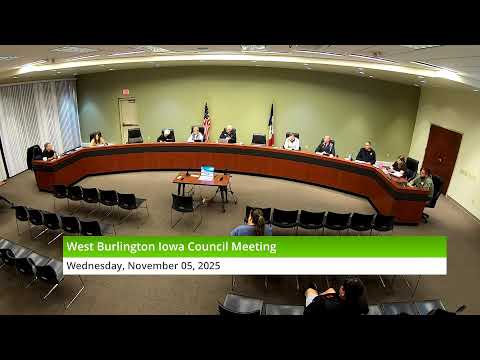
Council hears housing options: modular 'Homes for Iowa', use of city lots and down-payment assistance
Summary
Southeast Regional Planning Commission and Homes for Iowa outlined infill, rehab and down-payment strategies for West Burlington, including modular 'Homes for Iowa' units (three-bedroom ~ $108,000) and potential LMI TIF or housing-trust funding for subsidies.
Mike Norris of the Southeast Regional Planning Commission and Homes for Iowa presented a menu of housing strategies to the council, including infill construction on city-owned lots, owner-occupied rehabilitation, nuisance-acquisition tools under Iowa Code chapter 657, and down-payment assistance programs administered through regional housing trust funds.
Norris described modular Homes for Iowa product lines (roughly 1,000- and 1,200-square-foot ‘box’ plans). He said a three-bedroom 1,200-square-foot unit would be priced at about $108,000 in 2026; the organization can build at scale and reported capacity of roughly 50 homes per year across its network and an approximate six-month build-to-delivery timeline.
Council members and staff discussed the Mount Pleasant lot the city owns as a potential infill site and reviewed infrastructure constraints on other parcels (water/sewer connections). Norris and other presenters recommended combining local incentives (LMI TIF proceeds, TIF abatement, infrastructure support) with partners such as the Great River Housing Trust Fund to make infill projects feasible and to target quality, value‑retaining homes rather than minimal-cost structures.
Norris also described how owner-occupied rehab and nuisance-acquisition tools can be used. He noted that under Iowa Code chapter 657, a city can take specific actions for documented nuisance properties and that tax-sale priority bidding can be used in some cases to acquire problem properties.
On down-payment assistance, speakers described a deferred-loan model overseen by a housing trust fund: a subordinate recorded lien with no interest and repayment when the property is sold or the lien is removed. The trust fund noted several external funding sources (Federal Home Loan Bank, CDBG, Iowa Finance Authority programs) that could be layered with local TIF/LMI funds to expand affordability.
Council reaction and next steps: Several council members signaled support for pursuing both supply-side (infill/modular homes) and demand-side (down-payment assistance) measures. Staff and regional partners agreed to return with specific proposals and cost estimates for a Mount Pleasant infill project and to work with Iowa State on the housing readiness assessment referenced in the presentation.
Representative quotes: “We have capacity to build about 50 homes a year,” Mike Norris said about Homes for Iowa. On timing, Norris said a typical build time is “about 6 months from the first nail to delivery.”
Why it matters: West Burlington faces tight local housing supply and a pattern of starter homes converting to rentals; the council’s choice of incentives and whether to deploy LMI TIF funds will shape whether new owners or investors occupy incoming homes.