Get Full Government Meeting Transcripts, Videos, & Alerts Forever!
Get email alerts on the Housing Development topic
No spam. Unsubscribe anytime.
Fillmore planners outline housing pipeline, buildout targets and state housing mandate impacts
Summary
City development staff reviewed growth planning and specific projects (Bridges, Creekside, Fillmore Terrace), described a projected buildout population near 22,693 and explained how state housing mandates could force higher density despite local SOAR protections.
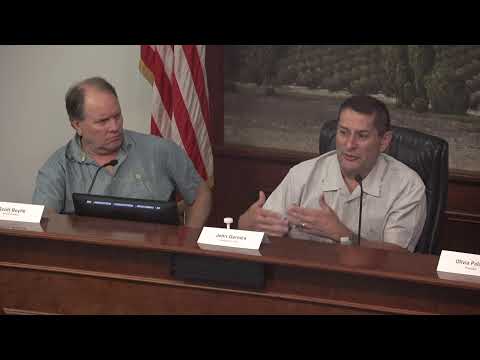
Kevin McSweeney, Fillmore’s community development director, told the joint meeting on June 23 that the city is preparing for modest growth while facing state housing requirements that can compel changes to local plans.
McSweeney said the city projects a buildout population of roughly 22,693 and is updating its general plan to consider long‑term growth. He described constraints that shape local planning — a 34,000‑acre green belt between Fillmore and Santa Paula, a larger green belt to Ventura County, and SOAR limits — while noting state housing elements require municipalities to create capacity for additional housing.
Active projects: McSweeney detailed three on‑the‑ground developments: the Bridges subdivision (about 47 units remaining to occupancy), Creekside in North Fillmore (about 152 units, including accessory dwelling units) and Fillmore Terrace, an affordable project slated to begin construction this fall. He said around 249 units are under construction at the time of the presentation.
State mandates and local response: councilmembers asked how state housing mandates interact with SOAR protections; McSweeney said the state can require cities to accommodate housing and that Fillmore has adjusted zoning in some places to provide residential capacity. He urged local flexibility while acknowledging political and planning tradeoffs.
Economic context and infrastructure: McSweeney described limited demand for large industrial users, pointed to a handful of vacant business‑park acres and walked the council through a planning map of potential downtown redevelopment areas and constrained growth corridors.
Next steps: McSweeney said city staff will continue generalized planning and traffic studies tied to new developments and encouraged continued public engagement as the housing element and general plan evolve.