Get Full Government Meeting Transcripts, Videos, & Alerts Forever!
Get email alerts on the Land Use Data Centers topic
No spam. Unsubscribe anytime.
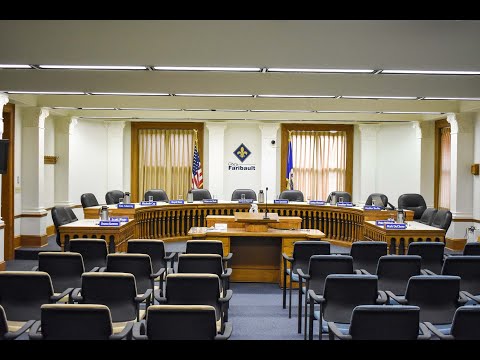
Faribault council narrows where data centers may locate after hearing sustained public opposition
Summary
After extended public comment opposing data-center development, Faribault City Council voted to adopt a definition of “data center” and permit it as a principal use in the I2 heavy industrial zoning district, while urging follow-up design standards and protections.
Faribault City Council on April 28 adopted a zoning text amendment defining “data center” as a principal, for-profit use and allowed such facilities in the city’s I2 heavy industrial district after a roll-call vote that recorded two dissenting votes.
The ordinance (2026-06) was presented by Harry Davis, the city’s planning manager, who said the change was intended to clarify where data centers could locate and to prevent the use from being placed where the city does not want it. Davis said the Planning Commission had unanimously recommended approval and suggested the council adopt specific design standards in chapter 7 of the Unified Development Ordinance to address operational limits and site design.
The matter drew a sustained public-comment period. Residents raised concerns about water and electricity demand, air emissions, potential PFAS contamination, noise and changes to the rural character of neighborhoods. “I don’t want Farbo to say data center at all,” said Miranda Lamb, who identified herself as living outside city limits and asked that the city protect rural qualities such as dark skies and quiet nights. Carolyn Schaefer said taxpayers should not be left paying for infrastructure upgrades if a data center strains local systems. “Maybe we need some guidelines, maybe some legislation,” she said.
Other speakers urged a moratorium, stricter environmental review and written guarantees from developers. Elizabeth Wright urged the city to amplify public discussion and avoid nondisclosure agreements for project details. Karen Zeller asked that council members study outcomes in similarly sized communities and demanded contractual guarantees for water- and utility-related impacts.
Council members acknowledged constituent concerns. A council questioner asked what would happen if the city did nothing; staff replied that without a definition the city would be vulnerable to data centers locating in undesired areas. Attorney guidance noted that a moratorium is stronger when paired with a clear definition of the activity being restricted.
The ordinance passed on a roll call in which Council Member Barnes and Dumbuya voted nay and the remaining members voted aye. Council and staff agreed to pursue supplemental design standards and other protections — such as development conditions and operational limits — to address the questions raised by residents.
Next steps: the council advanced ordinance 2026-06 and asked staff to return with specific design standards and more detail on operational limits and enforcement mechanisms.