Get Full Government Meeting Transcripts, Videos, & Alerts Forever!
Get email alerts on the Historic Building Rehabilitation topic
No spam. Unsubscribe anytime.
Hopkinsville board tables action on historic Attic School after developer says tax credits, plans in place
Summary
The Hopkinsville Code Ordinance Enforcement Board tabled the unsafe-structure case for 712 East 1st Street ("Attic School") for 45 days after the property representative, Demond Sutton of Men to Be, said tax credits and contractors are in place and requested time to begin debris removal and stabilizing work.
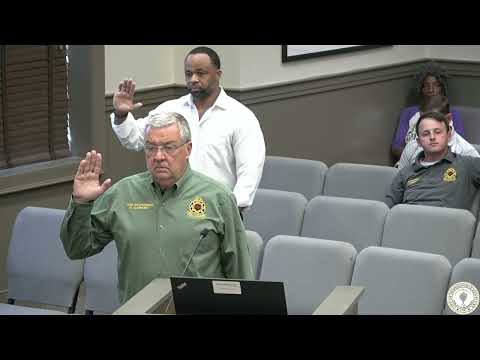
Rodney Davis, chair of the Hopkinsville City Code Ordinance Enforcement Board, on June 23 presided over a public hearing on the condition of 712 East 1st Street, known in records as the Attic School. Code enforcement officer Mark DeArmond told the board the building — particularly its West Wing — suffered a partial roof collapse and extensive structural deterioration observed during inspections in 2024 and a joint inspection in August 2025. DeArmond said Gardner Engineering’s report identified bowing exterior walls, failed roof trusses and interior collapse risks that prompted the city to fence the West Wing for public safety.
The issue drew representatives for the property owner, identified as the organization referenced in the record as Men to Be. Demond Sutton, a developer consultant retained by Men to Be, said he has worked on the project for about 10 months, engaged structural contractors and applied to the Kentucky Historical Council for tax credits. “What I’m asking for today is a 90 day period for us to go in there and get started on things,” Sutton told the board, adding he had contractors on site and funding committed for the first phase of work to remove debris, secure walls and replace the roof.
Board members pressed Sutton for evidence of funding and a realistic timetable for stabilizing the most dangerous portions. Sutton said he had been awarded tax credits and had prepared an extensive application package and budgets; he described a three‑phase plan and said phase one would focus on the roof, west‑wall stabilization and basement reuse planning. Code officer DeArmond emphasized that Gardner’s written comments label the West Wing’s condition as particularly hazardous, and that debris removal and internal work would be dangerous without engineering shoring and safe access.
After a brief recess, a board member moved to table the case to give Men to Be an opportunity to begin work and produce a work write‑up. Because of the board’s meeting schedule, the board agreed to table the case approximately 45 days, returning to the board on August 11 to review progress. The motion passed 3–2. The board instructed the property representatives to coordinate with the code officer on required permits and the work write‑up to remove the ordinance violation.
The board did not enter an order of demolition at this hearing; rather, it set a timetable for the owner’s representatives to demonstrate steps taken toward abatement. Public‑safety measures already in place include temporary fencing around the West Wing; DeArmond said fence rental costs (about $3,500 per month) will be charged as liens until the structure is resolved. The board added the Gardner Engineering reports (dated 01/15/2026 and 05/19/2026) to the record.