Get Full Government Meeting Transcripts, Videos, & Alerts Forever!
Get email alerts on the Public Safety topic
No spam. Unsubscribe anytime.
Charlestown approves police "blue envelope" program to help drivers with autism
Summary
The Charlestown Board of Public Works unanimously approved a voluntary "blue envelope" program proposed by Chief Eric Cruz that lets drivers with autism hand officers a single envelope with contact information and guidance during traffic stops; the department will not keep medical records.
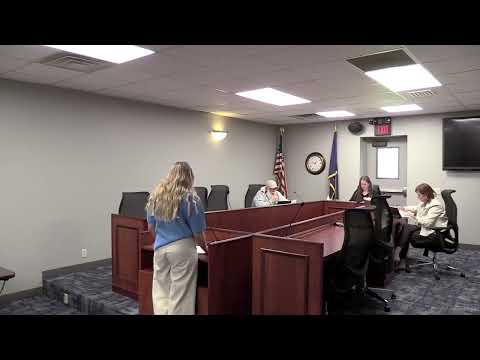
Charlestown's Board of Public Works on May 7 unanimously approved a voluntary "blue envelope" program the police department says will help drivers with autism and other information-needing motorists communicate their needs during traffic stops.
Chief of Police Eric Cruz introduced the program, saying officers and staff researched similar initiatives and modeled the city's plan on Bloomington, Ind.'s effort. "Someone could come down to the police department in the lobby or ask one of our police officers for a blue envelope," Cruz said. "They can keep all their information in one envelope ... and they can give that envelope to the police officer and it has directions and tips and information on it for the officer and for the driver." The envelopes include an emergency contact card and a sticker for the back of the car to signal to officers that the envelope is available.
Christine Johnson, the community member who initially suggested the idea, provided a written comment read to the board. She described her daughter Sarah's anxiety around traffic stops and said learning Charlestown would adopt the program "did a lot to lower her anxiety," adding that the option gives her daughter more confidence behind the wheel.
City staff emphasized the program is voluntary and that the police department will not log or retain medical information: "We're not keeping a record. We're not logging people's medical information," Cruz said. The board moved to approve the program and, after a second from Ernie Thompson, approved it by unanimous voice vote.
The department said the envelopes and stickers will be made available at the police lobby and carried by officers; staff did not provide a rollout date beyond saying the program will start once materials are available and distribution is arranged. The board did not attach any additional funding to the program at the meeting.
The board's action directs staff to implement the program; next steps mentioned in the meeting are producing the envelopes and stickers and notifying the public when they are available.