Get Full Government Meeting Transcripts, Videos, & Alerts Forever!
Get email alerts on the Mall Rebate topic
No spam. Unsubscribe anytime.
Norman officials pitch sales-tax rebate to spur Sooner Mall reinvestment; residents raise baseline and equity concerns
Summary
City staff and mall management outlined a proposed sales-tax reimbursement for capital investments at Sooner Mall that would rebate up to $300,000 per year from discretionary general-fund growth; residents questioned the baseline, precedent for other businesses, and whether the city should prioritize job-focused incentives instead.
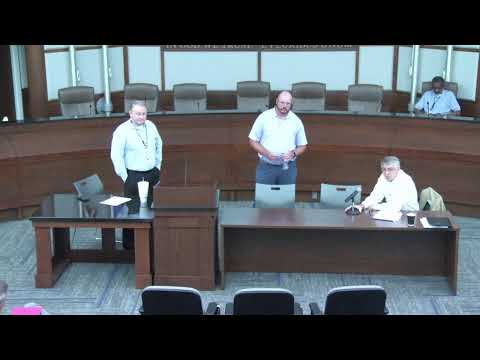
City Manager Daryl Pyle and the mall’s general manager presented a proposed reimbursement agreement June 24 that would pay Sooner Mall up to $300,000 a year as a performance-based rebate of discretionary general-fund sales-tax growth tied to capital investments.
Pyle said the agreement, converted from a council-approved term sheet into a draft contract (listed as K2526-117), uses a three-year average of sales through Dec. 31, 2024 as the baseline. Under the proposal the mall must spend on capital items (restroom remodels, lighting upgrades, playground equipment and similar projects that are capitalized rather than maintained) and submit receipts and financial statements to qualify for reimbursements in arrears. The original term was five years with two optional three-year extensions; Pyle said the first year has lapsed, making the initial remaining term effectively four years unless council resets the baseline.
Mall manager Derek Colwell framed the rebate as "100% of the excess" discretionary general-fund growth, but he emphasized that equals roughly 8.45% of total sales-tax collections on the property because other portions of the tax go to capital programs, public safety, Norman Forward and transit. Colwell said the city would still receive a substantial portion of sales-tax revenue even if the mall qualified for the full rebate.
The draft agreement caps annual reimbursable payouts at $300,000. City staff showed a worksheet indicating the mall would need about $13 million of additional taxable sales across the property to reach that maximum rebate level. Pyle said dedicated funds (capital sales tax, Norman Forward, public safety, transit) would continue to collect their shares and staff does not anticipate a loss in existing discretionary general-fund dollars because the rebate applies only to growth above the baseline.
The council previously discussed the concept in study sessions and advanced the term sheet to the Economic Development Advisory Board, which unanimously adopted a motion to consider alternatives; EDAB recommended a 50/50 split with a higher $500,000 cap, while council members later chose to advance the original lower-cap, 100% discretionary-general-fund-growth rebate and approved the term sheet unanimously at a subsequent council agenda, Pyle said.
Colwell cited examples in other metro areas — Town East Mall in Mesquite and First Colony Mall in Sugar Land, Texas — where cities and mall owners split costs on play areas, digital billboards and other amenities to boost foot traffic and marketing. He said those deals sometimes included tenant- or box-specific rebates intended to keep anchors in place.
Residents at the town hall raised several recurring concerns. Multiple speakers asked why the city would subsidize an already profitable corporate owner rather than require the landlord to pay for improvements; one commenter opposed any city support at this time and urged that a retail-specific policy be developed first. Others questioned whether the baseline point and the lapsed first year skew the deal in the mall’s favor and whether the city could reasonably measure the "but-for" condition — whether improvements caused new sales or merely accelerated growth that would have happened anyway. Pyle acknowledged forecasting uncertainty and said the city prefers reimbursements based on actuals rather than speculative projections.
Speakers also contrasted this rebate with the city’s traditional economic-development investments, which target quality-job creation (defined in state guidance as jobs at roughly $17.50 an hour plus benefits). Pyle said the two efforts serve different purposes: job-focused incentives target wages and benefits, while this program focuses on growing discretionary retail sales tax that funds core services such as roads, parks and public safety.
On the question of municipal risk, Pyle warned of the fiscal and public-safety costs of a failing mall: he cited a baseline figure the city used in the materials — roughly $72.56 million in mall sales generating about $2.993 million in total sales-tax receipts across categories — and said a sustained closure or vacancy in a major anchor could reduce discretionary resources and increase public-safety responses at vacant spaces.
No formal vote occurred at the town hall. City legal confirmed the rebate agreement could be approved on its own and did not have to be tied to a separate development agreement. The city’s next formal steps would be council consideration of the draft agreement and any policy changes council directs (staff told the meeting they are working on a more explicit retail-specific policy).