Get Full Government Meeting Transcripts, Videos, & Alerts Forever!
Get email alerts on the Planning Ethics topic
No spam. Unsubscribe anytime.
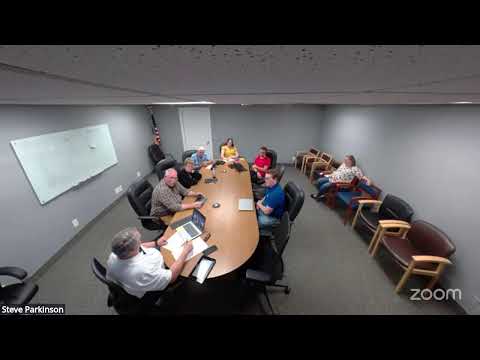
Roy City planning commission receives refresher on legal duties and ethics
Summary
A staff presenter reviewed Utah law and Roy City code outlining planning commission authority, required annual land‑use training (four hours), and ethics and disclosure rules, urging commissioners to avoid ex parte contacts and consult the city attorney on conflicts.
A staff presenter gave Roy City Planning and Zoning commissioners a concise refresher on statutory authority, training requirements and ethics obligations, emphasizing the difference between advisory and administrative roles.
The presenter said the commission’s authority is grounded in state enabling statutes and Roy City Code (Title 2, Chapter 1) and summarized powers including holding public hearings, making recommendations to the city council and reviewing subdivision plats. The presenter noted, “the planning commission is intended to shape not make policy” and that when acting as a land‑use authority the commission must apply ordinances as written.
The session covered mandatory annual land‑use training: four hours of continuing education per commissioner, with at least one hour on the commission’s powers, duties and the distinction between administrative, legislative and quasi‑judicial actions. The presenter also said ethics training is now required under this year’s rules, explaining the Municipal Officers and Employees Ethics Act requires written disclosures of any business interests regulated by the city.
On conflicts and abstention, the presenter advised commissioners to disclose material personal or financial interests publicly and in writing and to consult the city attorney before recusing. “Disclosure of conflict on any personal interest or investment which creates a conflict with your public duties must be disclosed in open meeting,” the presenter said.
The presenter warned against ex parte communications on administrative matters and urged a conservative approach: “Best practice, act as if you’re a judge and refrain from ex parte communications and public discussion on matters that might come before the planning commission.” Commissioners were reminded that closed or private meetings with applicants are prohibited and that such contacts should be placed on the public record when relevant.
The presenter also reviewed Open and Public Meetings Act obligations, advising that agendas be posted, minutes recorded and that minutes should reflect key discussion points, findings, decisions and conditions. Materials and a packet excerpted from the Utah League of Cities and Towns were offered for distribution to commissioners for future reference.
The presenter closed by offering to answer follow‑up questions and to share the training materials via email.