Get Full Government Meeting Transcripts, Videos, & Alerts Forever!
Get email alerts on the Service Capacity topic
No spam. Unsubscribe anytime.
County partners warn lack of medical respite, nursing access and payer engagement limit gains from care‑coordination
Summary
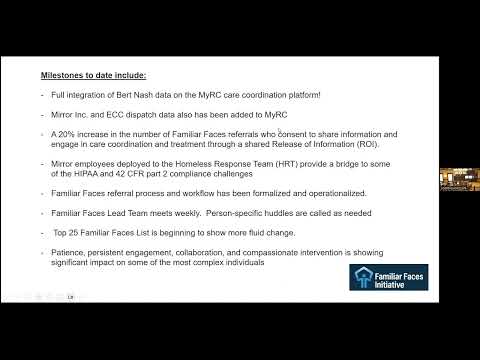
Shelter, hospital and county staff said focused weekly huddles and MyRC data sharing improve coordination but cannot substitute for medical respite beds, faster access to nursing care, or payer participation; shelter leaders said pilot funding and state grants could help test models.
County and partner speakers used the June 24 work session to name several service and funding constraints that reduce the reach of the Familiar Faces care‑coordination effort.
Shelter perspective: James Chisum, executive director of the Lawrence Community Shelter, said the shelter is serving far more people than before and that congregate shelter is often the wrong setting for medically complex people. He described private 'Monarch' units the shelter has used to host people who need stabilized space but said the shelter needs compensation and partnerships to scale that model.
Hospital and clinical concerns: LMH Health clinicians described the emergency department as the community's ultimate safety net and said having a prearranged plan for frequent users improves outcomes. "When Bob talks about people exiting the state hospital sometimes abruptly ... the emergency department is the ultimate safety net," said an LMH speaker, who added that hospitalization carries risks and that coordinated discharge plans matter.
Medical respite and long‑term options: Multiple speakers said there is a shortage of medical respite beds and limited quick access to residential nursing placements — a constraint for people who are not legally gravely disabled but still need post‑acute care. Panelists said some communities (Johnson County was cited) use step‑down and respite programs as part of a regional response, but that available capacity in Kansas appears limited.
Payer participation and barrier funds: Commissioners questioned whether managed care organizations were participating; staff said MCOs are generally not members of the weekly huddle because of HIPAA/42 CFR access rules, though case conferences with payers are done separately. Staff and partners also said rapid barrier‑reduction funds (small payments for IDs, application fees or short‑term needs) are often missing and that many partners would benefit from a pooled or braided fund.
Funding opportunities: Jonathan Smith of Lawrence Douglas County Public Health said the department won a community‑based primary care grant for state fiscal year 2027 with a first‑year cap of $50,000, which the department intends to use flexibly for uninsured and underinsured people; shelter leaders said such grants could pilot medical respite or subsidized private units.
Bottom line: Partners said the Familiar Faces model shows promise but that coordination alone does not replace concrete capacity (medical respite, flexible funds, residential nursing) or payer engagement; presenters asked commissioners whether they wanted staff to pursue vendor evaluations, regulatory analyses and funding proposals in follow‑up work.
The work session recessed with staff asking for guidance on which of those follow‑up items to prioritize.